
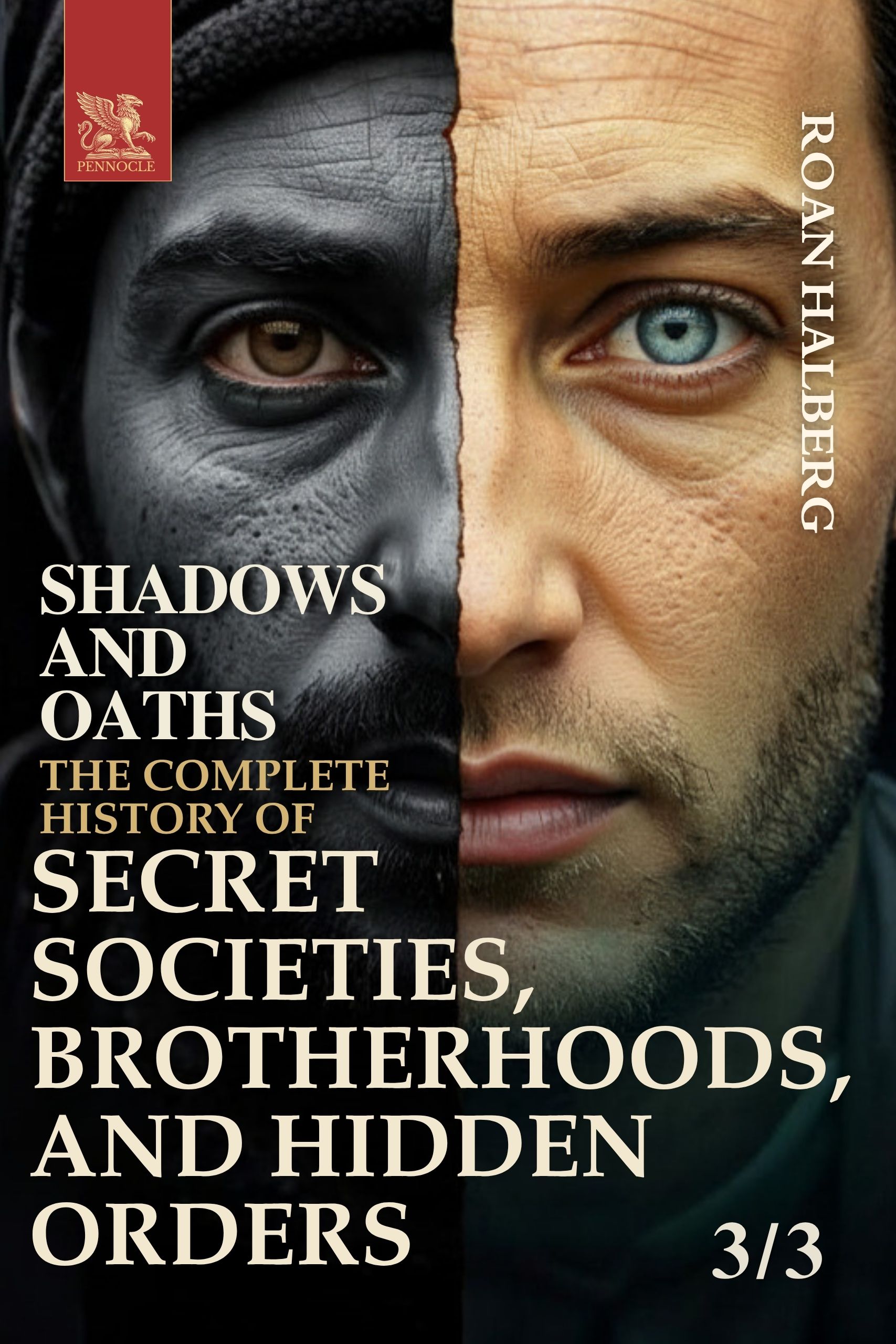
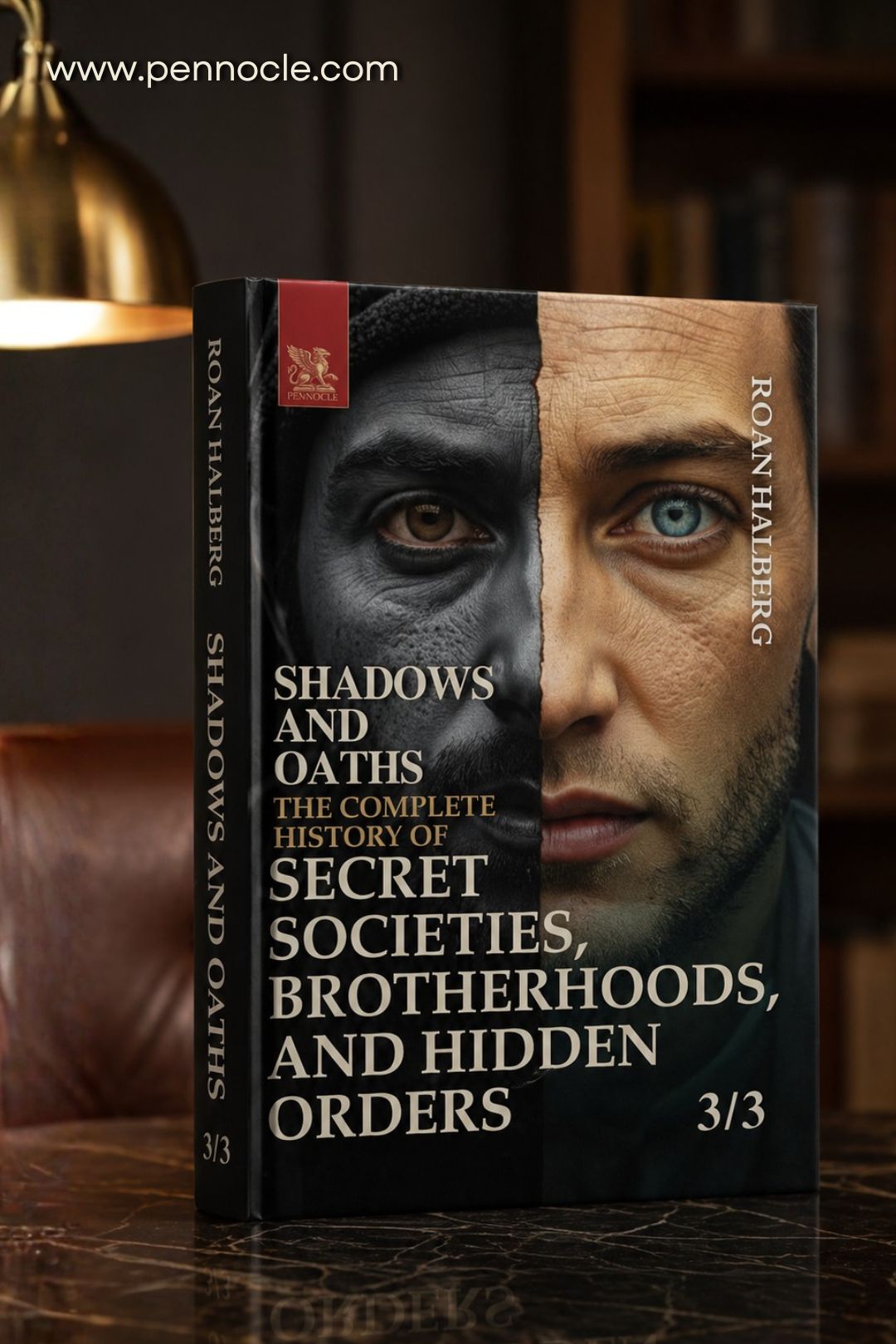
In the twentieth century, the state learned to think like a secret society. Intelligence agencies adopted cell structures, oaths, compartmentalization, and initiation rituals borrowed wholesale from the lodges and brotherhoods of earlier centuries. Meanwhile, the old secret societies adapted — or didn’t, and died.
THE MODERN UNDERGROUND, Volume III of SHADOWS AND OATHS trilogy, tracks both stories from 1900 to the present. This is history at its most uncomfortable.
The Ku Klux Klan of the 1920s wasn’t a marginal fringe group — at its peak it had between four and six million members and counted governors, senators, and judges among its ranks. The Afrikaner Broederbond, operating through cells embedded in churches, schools, and universities, didn’t just support apartheid — it designed the system from the inside. Italy’s P2 Masonic lodge, run by a man named Licio Gelli from a modest house in Tuscany, connected politicians, military officers, bankers, and intelligence services in a network whose full extent emerged only after a police raid in 1981 turned up a membership list of 962 names — and even then, the investigations were never completed.
But THE MODERN UNDERGROUND is also about survival. It covers the Abakuá in Cuba — a secret society descending directly from the Ekpe leopard cult of West Africa, still active today, having outlasted both colonialism and the Cuban revolution. It covers the Nyau societies of Malawi, whose masked Gule Wamkulu ceremonies are now recognized by UNESCO. It covers Japan’s ultranationalist Dark Ocean Society, whose founder Toyama Mitsuru received politicians, gangsters, and military officers in the same modest house for sixty-five years. It covers what Freemasonry does when its American membership falls from four million to one million in a single generation.
The final chapters look forward: into digital communities, encrypted networks, and an age of total surveillance in which the desire for private belonging seems stronger, not weaker, than before.