
Where does religion come from?
Not which religion is true—but why does the evidence for spiritual behavior appear tens of thousands of years before the first city, the first written text, the first organized state? What were people doing in the painted caves of Chauvet and Lascaux? Why did someone spend years carving and erecting massive stone pillars at Göbekli Tepe 11,000 years ago, in a complex organized by a sophisticated symbolic worldview—and then deliberately bury the entire structure? No one has yet produced a satisfying answer.
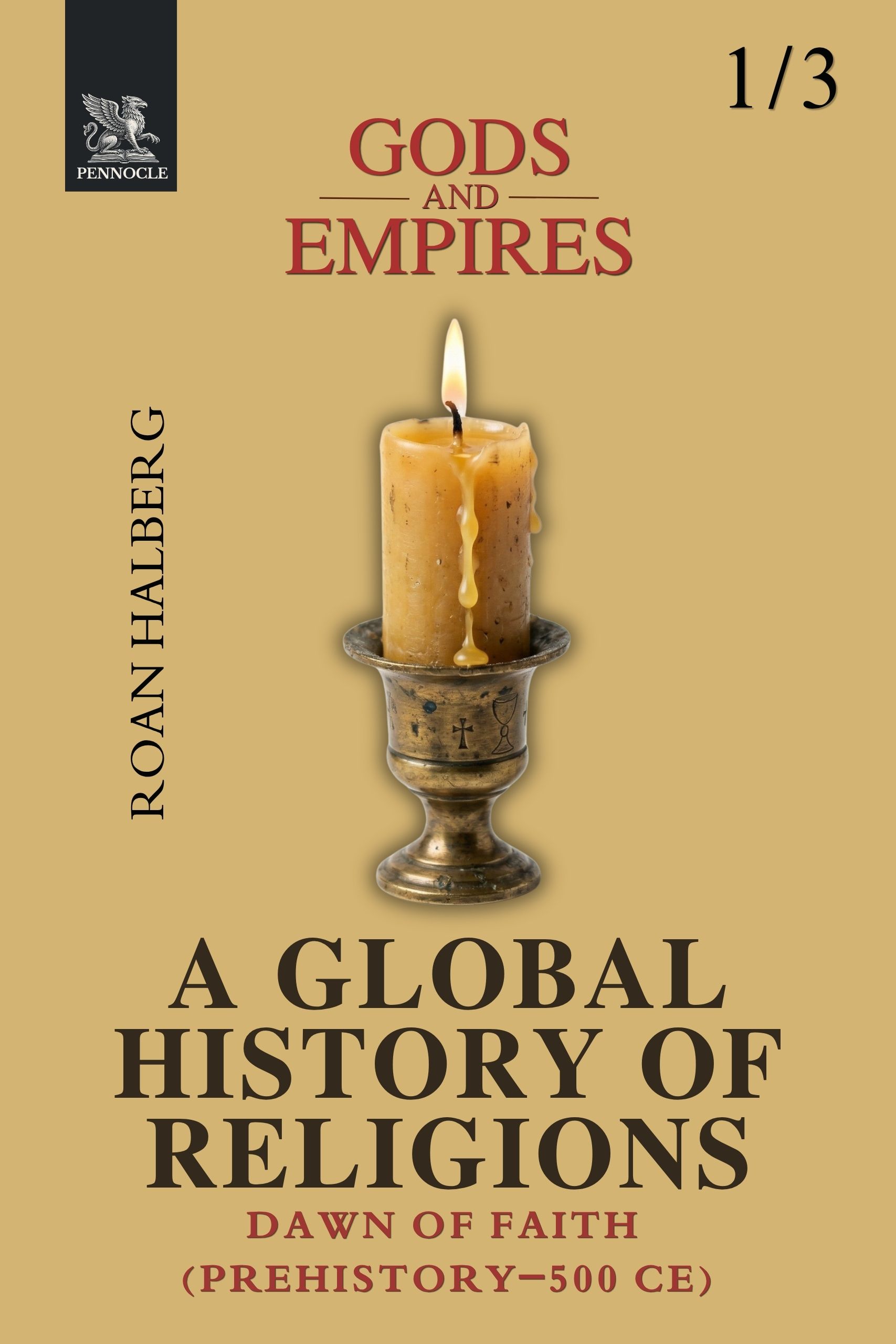
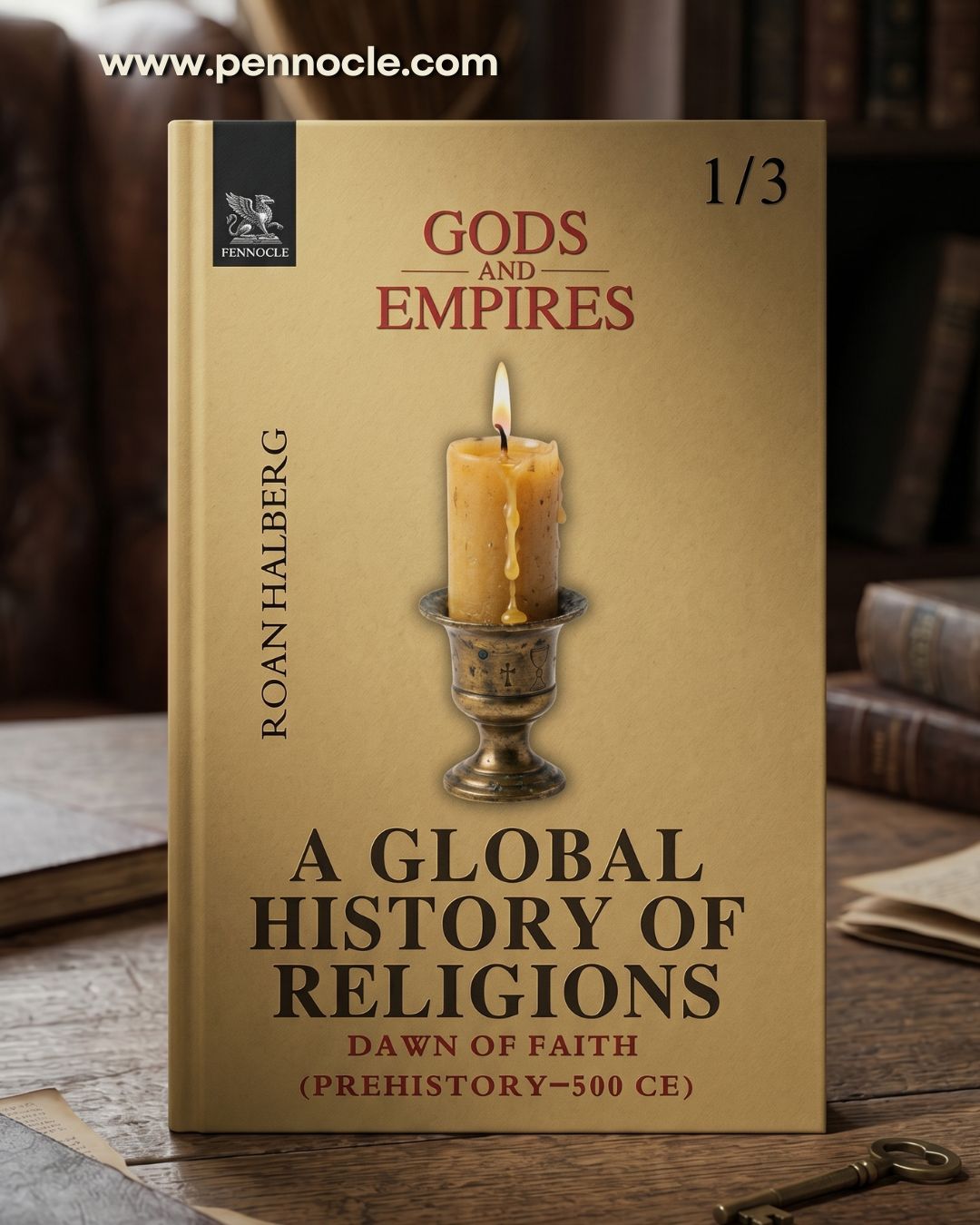
Volume I of GODS AND EMPIRES follows these questions from the earliest detectable traces of religious behavior through the collapse of the ancient world.
Along the way, it covers the prehistoric evidence—cave art, Neanderthal burials, and the archaeology of shamanism—that suggests the religious impulse is older than civilization itself, and may have helped create it. It covers the great ancient religions: Mesopotamia’s stories of flood, death, and immortality that predate the biblical versions by more than a thousand years; Egyptian theology’s promise of eternal life to those who lived by cosmic order; and the Canaanite religious world that provides the often-surprising backdrop to early Israelite religion.
It covers Zoroastrianism—the Persian faith that introduced heaven, hell, judgment, and resurrection into ancient Near Eastern thought, and whose influence can be traced into Judaism, Christianity, and Islam. And it covers the Axial Age: the two-century window when the Buddha formulated the Four Noble Truths in the forests of India, Confucius wandered China looking for a ruler who would govern by virtue, the Hebrew prophets declared that God cared more about justice than burnt offerings, and Greek philosophers began dismantling mythology with argument. Four civilizations. No detectable contact. One revolution.
The final section covers the world that produced the New Testament: the fractured, expectant Judaism of the Second Temple period; Roman religious life saturated with mystery cults from Egypt and Persia; the movement that formed around Jesus of Nazareth and what can actually be known about it; Paul’s radical transformation of that movement into something universal; the proliferation of competing Christianities; and the eventual emergence of a single dominant form.
Written as narrative nonfiction—concrete, specific, honest about uncertainty—this is the story of how humanity first learned to ask the questions it is still asking.