
Between 1600 and 1900, the secret society became the primary engine of political change. This is not a metaphor. Democratic revolutions, nationalist uprisings, and the overthrow of colonial empires — nearly every major transformation of the modern world had a secret organization behind it. Not a mythical conspiracy pulling invisible strings, but real people meeting in the dark, swearing oaths, and making things happen.
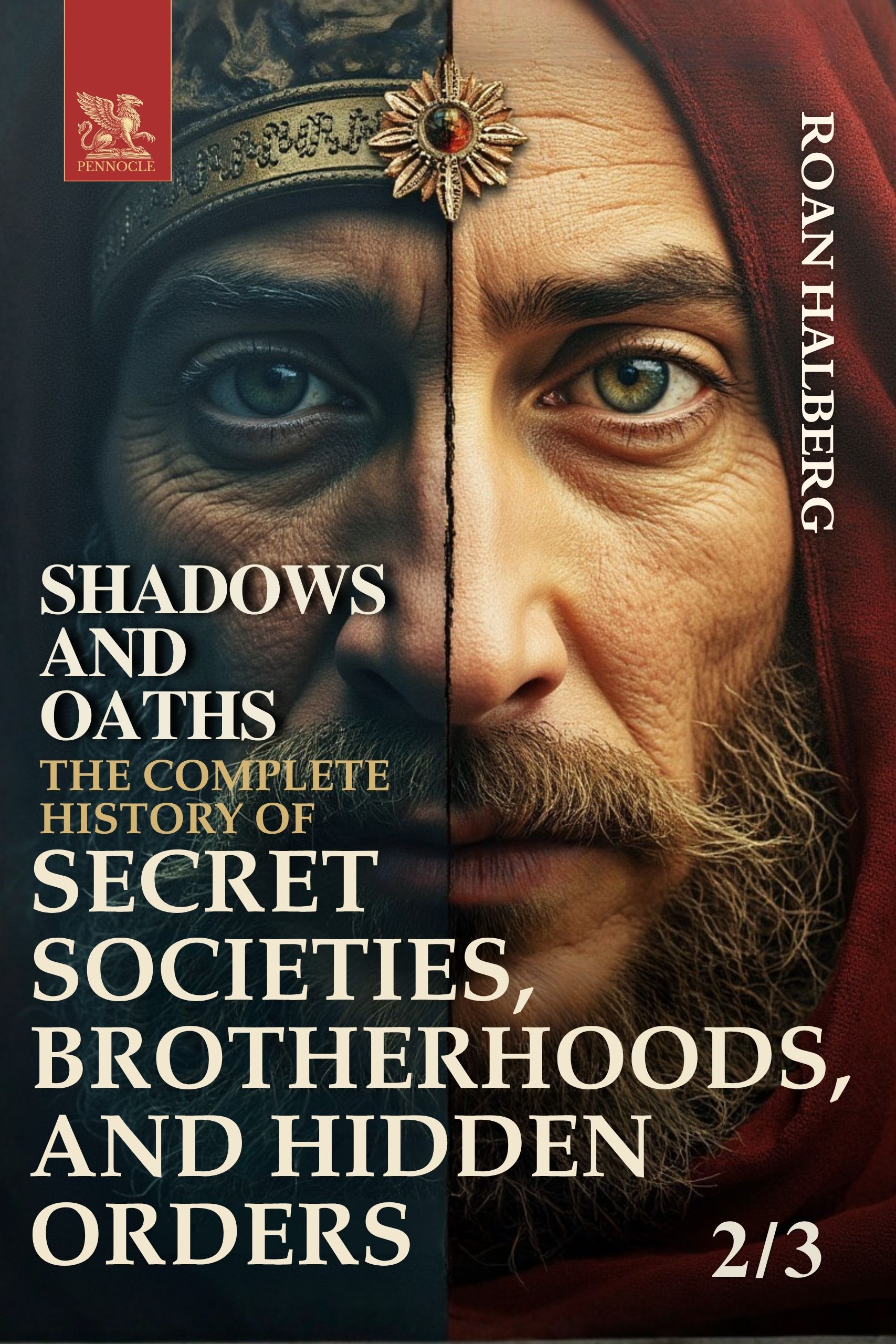
THE AGE OF LODGES tells the full story. Volume II of SHADOWS AND OATHS trilogy opens with the Rosicrucian furor of 1614-1616 — three mysterious pamphlets announcing an invisible brotherhood of enlightened scholars, written by a German Lutheran pastor who may have meant them as a literary experiment and set off a continent-wide sensation instead. It moves through the birth of Freemasonry in London coffeehouses (four tavern lodges, June 24, 1717), the nine-year life of the Bavarian Illuminati before a minor German prince crushed them with a police raid, and the revolutionary networks that followed: the Carbonari of southern Italy, the Decembrists on Senate Square in December 1825, the three Greek merchants in Odessa who founded the Filiki Eteria in 1814 and sparked a war of independence, the Lautaro Lodge that gave San Martín his mandate to cross the Andes.
Not every secret society wanted revolution. The chapter on the Hell-Fire Club finds British aristocrats — politicians, poets, an earl who would become First Lord of the Admiralty — playing at blasphemy in the underground caves at West Wycombe. The chapter on the Molly Maguires follows a Pinkerton detective deep into the Pennsylvania coal fields and asks a question that still doesn’t have a clean answer: labor freedom fighters, or murderers? The volume also covers China’s White Lotus and Triad societies, the origins of the Yakuza, Iran’s Faramosh Khaneh, and the Young Turks — a story that begins with medical students meeting in secret in Constantinople in 1889 and ends with genocide in 1915.
By 1900, the lodge model has reached its limits. Mass politics, modern surveillance, and the telegraph have changed the game. Volume II ends at the threshold of an age when states themselves will learn to operate like secret societies.