-
Blood for Gold – Volume 1
The Global History of Mercenaries from the Pharaohs to Putin’s Wagner Group: Volume 1: Swords of Antiquity (2500 BCE–150)
Three thousand years of hired war. The Mamluks who stopped the Mongols. The Catalans who conquered Athens. Vikings guarding Constantinople. The only woman to command a mercenary army. Hussite peasants who defeated five crusades. Twenty-two chapters spanning Mesopotamia, Egypt, Greece, Rome, Byzantium, India, China, and medieval Europe.
-
Blood for Gold – Volume 2
The Global History of Mercenaries from the Pharaohs to Putin’s Wagner Group: Volume 2 – Knights of Fortune (1500 – 1900)
Four centuries when war became a business. Condottieri warlords. Landsknechts who sacked Rome. Cossacks, ronin, and Buddhist monks with muskets. Half a million Irish soldiers dead in foreign service. Hessians shipped to America. A lawyer who conquered Nicaragua with fifty-eight men. Twenty-four chapters across every continent.
-
Blood for Gold – Volume 3
The Global History of Mercenaries from the Pharaohs to Putin’s Wagner Group: Volume 3 – Corporations of Violence (1900 – 2025)
From the Foreign Legion to the Wagner Group. Flying Tigers, Cold War mercenaries in Congo, Executive Outcomes in Sierra Leone, Blackwater in Iraq, Prigozhin’s rise as Putin’s chef and his march on Moscow. Colombian contractors, jihadist PMCs, cyber-mercenaries, autonomous drones. Twenty-one chapters and an epilogue on the future of privatised war.
-
Buddha and His Legacy
From Siddhartha to Zen and Mindfulness: A 2,500-Year History of Buddhism
From the historical Buddha to Tibetan tantra, from Silk Road monks to Silicon Valley mindfulness apps — Buddha and His Legacy is the complete 2,500-year story in one gripping narrative. 650 pages. 38 chapters. Rigorously researched, compulsively readable.
Available formats: Hardcover, Paperback, Ebook, Audiobook
-
Espionage. Altars and Spies
A Global History of Religious Espionage and Intelligence
Temples, monasteries, confessionals, pilgrimages. For five thousand years, the world’s most effective intelligence networks were not run by governments — they were run by priests, monks, missionaries, and confessors. Altars and Spies traces the deep, structural relationship between religious institutions and espionage across five millennia, six continents, and every major faith tradition. From the Oracle at Delphi to Russian Orthodox churches built near NATO airfields, the connection between faith and intelligence has never been what it appears.
-
Espionage. Double Agents
A Global History of Betrayal, Espionage and the Hunt for Moles
A global, transhistorical examination of betrayal in espionage — why people become double agents, how they survive undetected for years, and how counterintelligence services hunt them down. From Ephialtes at Thermopylae to Aldrich Ames at Langley, from the Cambridge Five to Cuba’s systematic penetration of the CIA, Double Agents uses more than fifty cases across six continents and three millennia to answer the questions that popular accounts rarely ask. Why do intelligence services consistently fail to see what is in front of them? What separates a successful mole hunter from a paranoid one? And is betrayal always a moral failure — or can it sometimes be an act of conscience? Rigorous, global in scope, and genuinely surprising on every page, this is the definitive analytical history of espionage’s darkest art.
-
Espionage. Industrial Spies
A Global History of Economic Espionage, Trade Secrets, and Stolen Technology
From Venetian merchant-spies and the theft of China’s silk secret to the KGB’s technology theft machine and the semiconductor wars — a 3,000-year history of how stolen knowledge built empires, destroyed monopolies, and permanently altered the balance of global power.
Available formats: Hardcover, Paperback, Ebook, Audiobook
-
Espionage. Lies, Spies and Disinformation
A Global History of Espionage Through Deception, Manipulation and Psychological Warfare
A global, three-thousand-year history of deception, disinformation and psychological warfare as weapons of intelligence services — from the Hittite spies who fooled Ramesses II to the AI deepfakes bending today’s elections. Rigorously sourced and impossible to put down, it reveals the one truth every spymaster has known: the target is always the human mind, and the weapon is always a carefully constructed lie.
Available formats: Hardcover, Paperback, Ebook, Audiobook
-
Espionage. The First Spies
A History of Ancient Espionage from the Pharaohs to Sun Tzu
Before there were states, there were spies. The First Spies traces the origins of intelligence from prehistoric hunter-gatherers through the fall of the ancient world, covering more than thirty civilisations — from Egypt and Persia to the Mongols, the Aztecs, the Inca, and feudal Japan. A global history of the oldest human weapon: information.
-
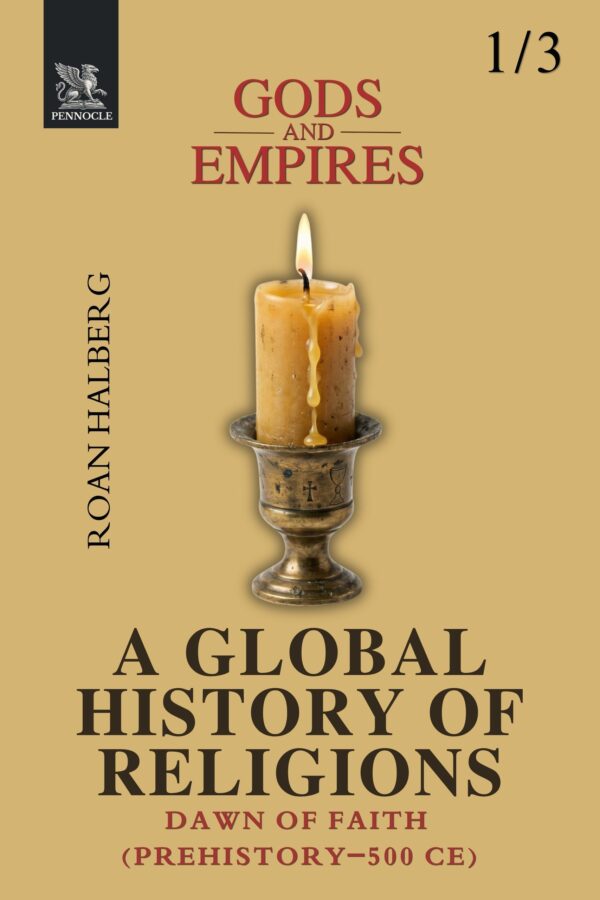
Gods and Empires – Volume 1
A Global History of Religions: Volume I — Dawn of Faith (Prehistory–500 CE)
From the first Neanderthal burial to the fall of Rome, Volume I of GODS AND EMPIRES traces 100,000 years of human religious experience.What drove people to paint sacred images in near-inaccessible caves, or to build massive stone temples before they had writing, cities, or the wheel?The volume moves through ancient Mesopotamia and Egypt, the birth of ethical monotheism in Persia, the Vedic world that became Hinduism, and the remarkable Axial Age—when Buddha, Confucius, and the Hebrew prophets all transformed human consciousness within a few centuries of each other. Narrative nonfiction for curious readers who want depth without the dryness of a textbook. -
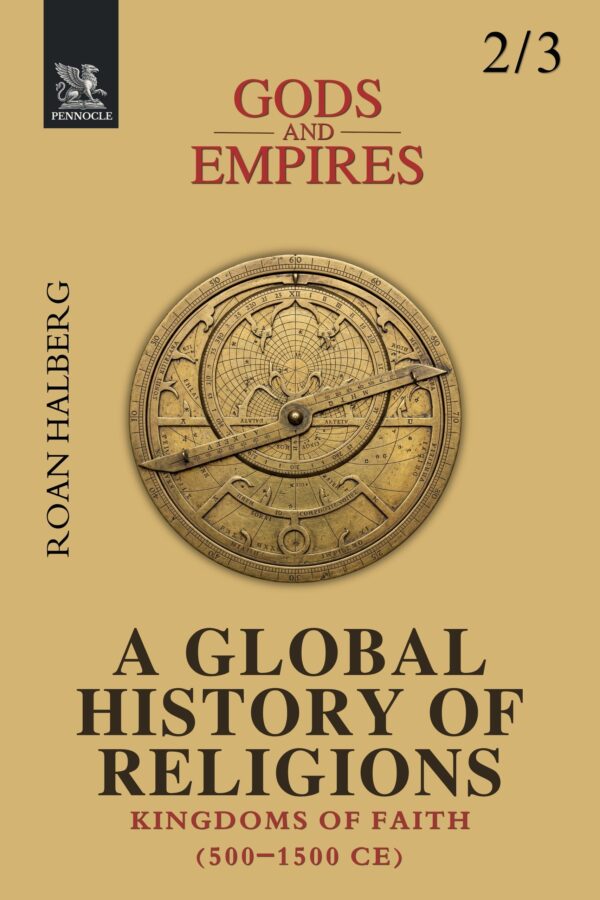
Gods and Empires – Volume 2
A Global History of Religions: Volume II — Kingdoms of Faith (500–1500 CE)
Between 500 and 1500 CE, religion didn’t merely coexist with civilization — it built it.
Volume II of GODS AND EMPIRES follows a thousand years across three continents: the birth of Islam and its breathtaking expansion; Baghdad’s golden age of philosophy and science; Byzantine theology written in gold mosaic; the Crusades, Gothic cathedrals, Sufi mystics, Kabbalists, and wandering friars. It covers the Black Death’s devastating effect on medieval faith, the Ottoman Empire’s experiment with structured religious coexistence, and the forgotten birth of Sikhism in Punjab’s contested religious landscape.
Narrative nonfiction for curious readers who want to understand how faith shaped the world we inherited.
-
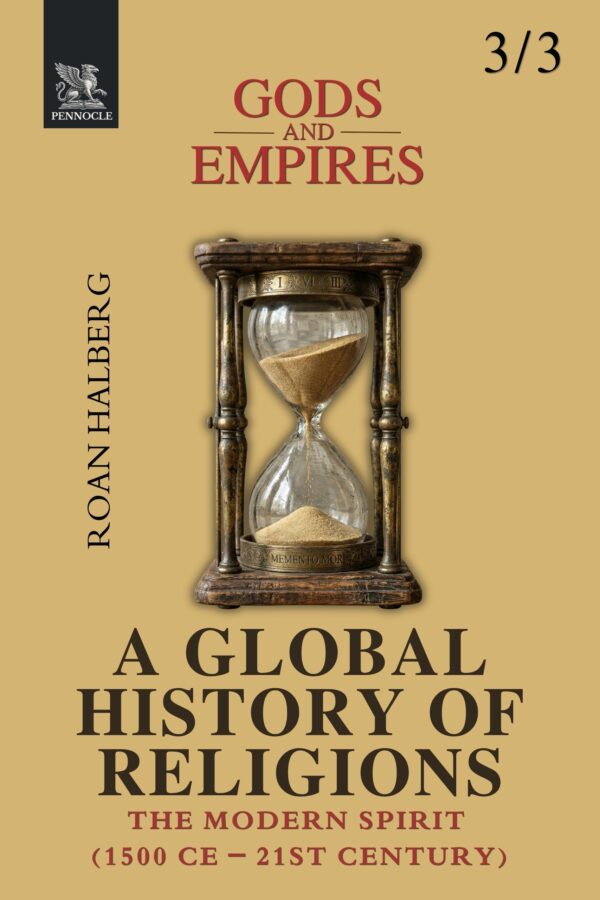
Gods and Empires – Volume 3
A Global History of Religions: Volume III — The Modern Spirit (1500 CE–21st Century)
Religion was supposed to die in the modern world. The Enlightenment would replace it with reason, Darwin with science, and prosperity with indifference. It didn’t happen. Volume III of GODS AND EMPIRES follows faith from Luther’s thunderstorm vow to surveillance cameras in Chinese mosques — through the Reformation’s fracturing of Christendom, the Wars of Religion, colonial missions and their complicated legacies, Darwin’s challenge, two World Wars, the Holocaust’s devastating theological aftermath, and the global religious resurgence that confounded every prediction. Christianity’s center has moved to Africa. Islam is the world’s fastest-growing religion. The questions haven’t gone away. This volume explains why.
-
History of Religions Through the Ages- Volume 1
From the Origins of Faith to the High Cultures of Antiquity
Volume 1 investigates the dawn of human spirituality, analyzing prehistoric rituals, early goddess worship, and the monumental temple cultures of ancient Egypt and Mesopotamia.
-
History of Religions Through the Ages- Volume 2
The Birth of World Religions: Buddhism, Hinduism, and the Abrahamic Traditions
Volume 2 covers the pivotal Axial Age, detailing the emergence and historical development of Hinduism, Buddhism, Greek philosophy, Judaism, Christianity, and Islam.
-
History of Religions Through the Ages- Volume 3
From Medieval Era to Modernity: Religion Between Tradition and Future
Volume 3 examines the global interaction of faiths from the Middle Ages to the present, focusing on religious adaptations to scientific discovery, globalization, and the digital age.
-
Pirates: The Complete World History
From Ancient Sea Raiders to Modern Maritime Outlaws Across All Seas and Oceans: How Maritime Raiders Shaped Trade, Empires, and Culture Across Continents
Three millennia of maritime predation in one comprehensive account. From Bronze Age sea raiders to today’s Somali coast, this book traces the full global arc of piracy — the economics, the power structures, and the recurring patterns that no empire has ever managed to stop permanently.
Available formats: Hardcover, Paperback, Ebook, Audiobook