Table of Contents
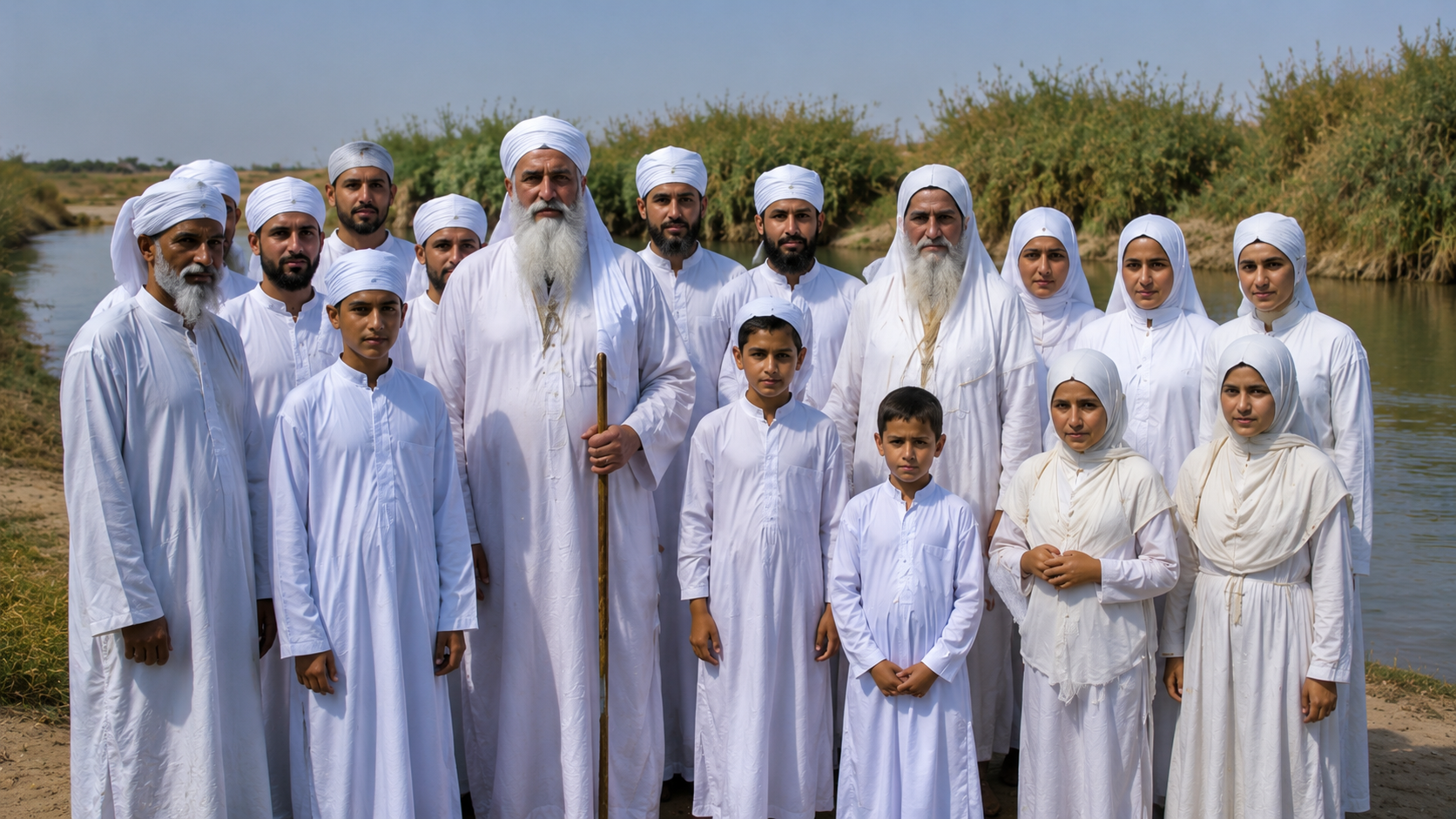
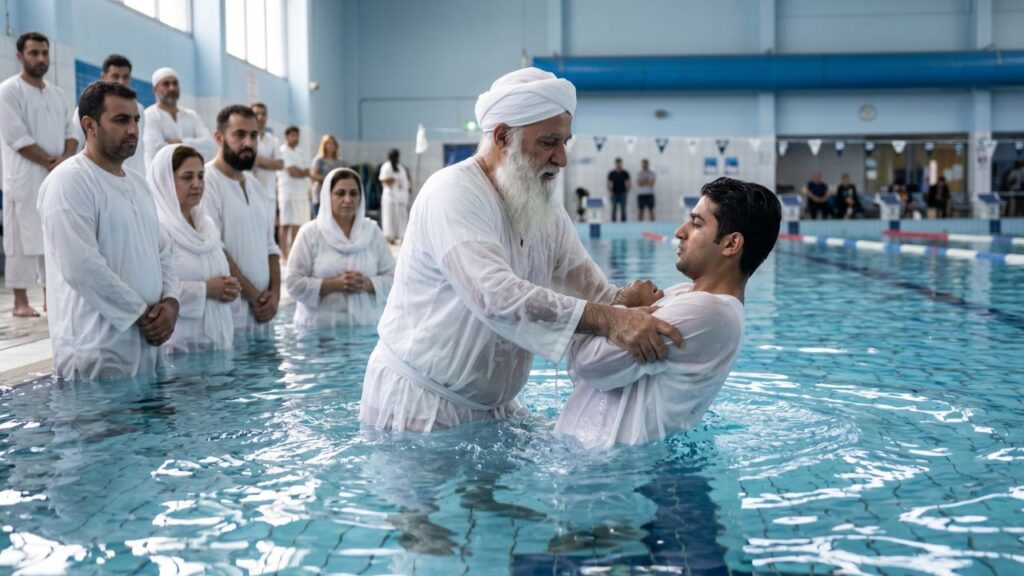
Somewhere in the western suburbs of Sydney, a small group of people wades into an indoor swimming pool on a Sunday morning and re-enacts one of the oldest continuous religious rites on earth. They speak prayers in a dialect of Aramaic older than any surviving manuscript of the New Testament. They regard John the Baptist — not Jesus — as humanity’s greatest prophet. And they have been performing this ritual, generation after generation, for roughly two thousand years.
The Mandaeans are, in the estimation of most scholars, the world’s only surviving heirs to ancient Gnosticism — the spiritual tradition that once rivalled early Christianity across the ancient Mediterranean. Yet they are almost entirely unknown to the broader world, and they are disappearing fast.
This article traces who the Mandaeans are, where they came from, what they believe, how the 2003 invasion of Iraq nearly finished them off, and why their fate matters far beyond the circles of academic theology.
Who Are the Mandaeans? Foundation and Context
The word Mandaean derives from the Classical Mandaic root manda, meaning “knowledge” — the same semantic root as the Greek gnosis. If that etymology is correct, the Mandaeans are the only religious community in history to have identified themselves as Gnostics in their own language.
Mandaeism is a monotheistic, dualistic religion. Its cosmology divides reality into two opposing realms: a World of Light, governed by the supreme being Hayyi Rabbi (“The Great Living God”), and a World of Darkness from which human souls must be liberated through spiritual knowledge and ritual purification. This is classic Gnostic theology — the idea that the material world is a flawed or corrupt creation, and that salvation lies in recovering one’s divine spark.
But the Mandaeans are not philosophers in ivory towers. Their religion is intensely, physically embodied. The central sacrament — called masbuta — is full-immersion baptism in flowing water. Unlike the one-time Christian sacrament, masbuta is performed repeatedly throughout a believer’s life: for purification after sin, before religious festivals, at marriage, and as a regular act of spiritual renewal every Sunday. Water, for Mandaeans, is not a symbol of the divine. It is the divine — the living, moving presence of God.
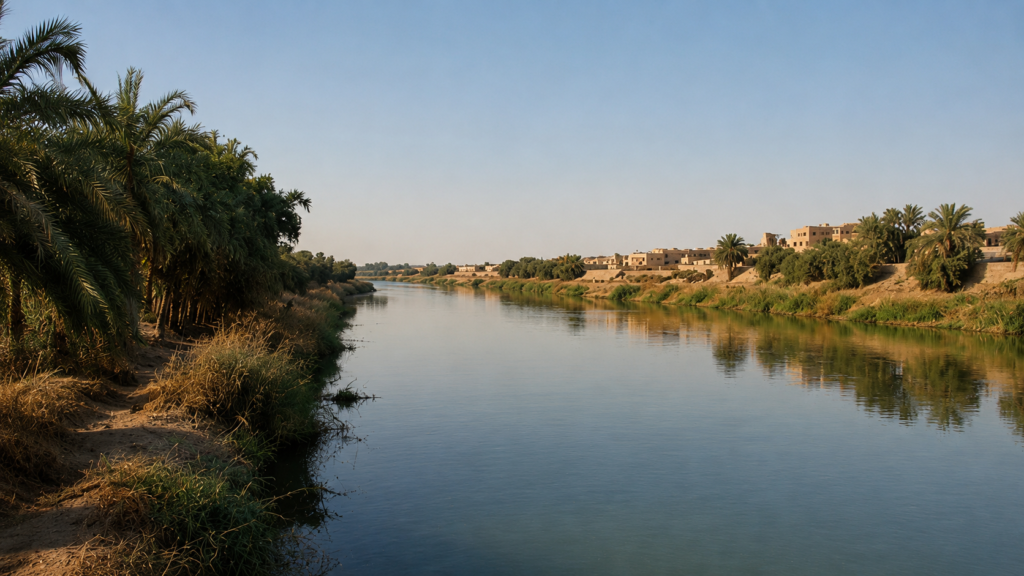
The community traces its origins to the Jordan Valley, from which their ancestors migrated eastward roughly two thousand years ago, eventually settling along the lower Tigris, Euphrates, and Karun Rivers in what is today Iraq and Iran. Scholar Jorunn J. Buckley, one of the foremost authorities on Mandaean studies, locates Mandaeism within the broader family of ancient Israelite religious offshoots — alongside Judaism and Samaritanism — though with a deeply independent theology that rejects Moses, Abraham, and Jesus as false prophets.
💬 “Imagine if, seeking the origins of ancient Gnostic texts, it turned out that they were connected not with an extinct religious group, but one that still exists in small isolated communities in Iraq and Iran. Their rituals could then be observed, allowing us to understand the texts in ways that might otherwise be impossible.” — Professor James F. McGrath, Butler University
The Intellectual Core: A Gnosticism That Survived the Ages
Here is what makes the Mandaeans genuinely extraordinary, and why the academic world periodically erupts in excitement about them: every other Gnostic movement from late antiquity — the Sethians, the Valentinians, the Marcionites, the Cathars — died out. Every single one. The Mandaeans did not.
The Nag Hammadi library, discovered in Egypt in 1945, electrified scholars because it provided direct access to what had been assumed to be an entirely extinct tradition. The Mandaeans, living quietly along the Iraqi marshes, had been a living parallel archive all along.
Their sacred literature is vast and ancient. The primary scripture, the Ginza Rabba (“The Great Treasure”), is a compilation of cosmological, theological, and ethical teachings divided into two parts: the Right Ginza, addressing cosmology and moral instruction, and the Left Ginza, known as the “Book of Souls,” which guides the soul’s ascent after death. The Ginza contains materials that scholars date to between the 2nd and 7th centuries CE, though much of it was transmitted orally long before being committed to writing.
The Mandaean Book of John (Draša d-Yahya) is perhaps the most surprising text in this library. It contains sermons and narratives attributed to John the Baptist himself — a figure Mandaeans regard as the greatest and last true prophet. John is not a forerunner to Jesus in Mandaean theology; he is the culmination. Jesus appears in Mandaean texts, but as a deceiver who distorted John’s teachings.
📌 KEY INSIGHT
The Mandaeans are the only religious tradition on earth that venerates John the Baptist as its central prophet while rejecting Jesus. They possessed their own Book of John — containing teachings attributed directly to the Baptist — for centuries before Western scholars even knew it existed. The English translation, produced by Drs. Charles Häberl and James McGrath, was only published in 2019.
Their sacred language, Classical Mandaic, is an eastern Aramaic dialect closely related to the language used in the Babylonian Talmud. It is written in the Mandaic script, a cursive form derived from Parthian chancellery writing. Today, Classical Mandaic survives only as a liturgical language; a smaller number of Mandaeans in Iraq and Iran still speak Neo-Mandaic as a vernacular, but even that is critically endangered.
Evidence, Data, and the Collapse of a Community: A Timeline
The story of Mandaean survival is, in large part, a story of one catastrophe after another — and of stubborn persistence despite them.
TIMELINE: The Mandaean Population in Iraq
| Year | Estimated Mandaean Population in Iraq | Key Event |
|---|---|---|
| 1947 | ~7,000 | Post-WWII census estimate |
| Mid-1990s | ~30,000 | Growth under Ba’athist-era tolerance; marshland drainage begins |
| 2003 | ~60,000–70,000 | US-led invasion; community enters freefall |
| 2007 | ~5,000 | Mass exodus; targeted killings, kidnappings, forced conversions |
| 2014–2017 | <3,000 | ISIS consolidates power across northern and central Iraq |
| 2025 | <2,000 | Ongoing emigration; 50–60 families depart in first five months of 2025 alone |
The collapse after 2003 was not incidental. Mandaeans were specifically targeted by both Sunni and Shi’a militants who branded them as kafir — unbelievers — despite their Quranic designation as Sabaeans, one of the “People of the Book” afforded protected status under classical Islamic law. Their vulnerability was compounded by a core religious prohibition: Mandaean pacifism. Their faith forbids the use of violence in self-defence. Hundreds were killed; many more were abducted, raped, or tortured. Mandaean goldsmiths and silversmiths — the community’s traditional trades for centuries — were robbed and murdered at markedly higher rates than their Muslim counterparts in Baghdad.
By 2006, UNESCO formally listed Mandaic in its Atlas of the World’s Languages in Danger of Disappearing. The Minority Rights Group subsequently documented that around 85% of Iraqi Mandaeans had left their homeland.
Global Mandaean Diaspora — Current Distribution (2023–2025 estimates)
| Country | Estimated Population |
|---|---|
| Australia | ~15,000 |
| USA | ~12,000–15,000 |
| Sweden | ~13,000 |
| Germany | ~2,200–3,000 |
| Iran (remaining) | ~1,000–2,500 |
| Iraq (remaining) | <2,000 |
| Other (Canada, UK, NL, etc.) | ~5,000+ |
| Total worldwide | ~60,000–100,000 |
The global total is uncertain because Mandaeans have historically avoided registering with state authorities, preferring discretion — a survival habit formed over two millennia as a minority faith.
Practical Implications: What Is Lost When a Religion Dies?
The Mandaean crisis is not only a human rights emergency, though it is certainly that. It is also an irreplaceable intellectual and cultural loss in the making.
Professor Charles Häberl of Rutgers University has argued that the Mandaeans have “made immense contributions to the society of modern Iraq, far out of proportion to their small size” — as craftspeople, academics, and physicians. Their long tradition of silversmithing and goldsmithing represents a continuous artistic heritage stretching back to the early medieval period. Their manuscripts, many still untranslated, contain cosmological and theological material that scholars of early Judaism, early Christianity, and Gnostic studies have barely begun to process.
When a religious tradition dies, it does not merely lose its practitioners. It loses an entire epistemology — a distinct way of asking the oldest human questions. The Mandaean vision of the soul’s journey through ascending worlds of light, their intricate angelology, their ethics of charity (the Ginza Rabba commands: “If you see anyone hungry, feed him; if you see anyone thirsty, give him a drink; give alms to the poor”) — all of this represents two thousand years of sustained human reflection that exists nowhere else.
💬 “Diaspora really began in 2003. Now, Mandaeans have no homeland. Everything is sort of up in the air. People say: ‘We need to acclimate to this new situation. Our children are going to grow up in the US or in Germany. They will date outside their religion. Like any community in crisis, we need to change.'” — Dr. Charles Häberl, Rutgers University (quoted in Fanack, 2022)
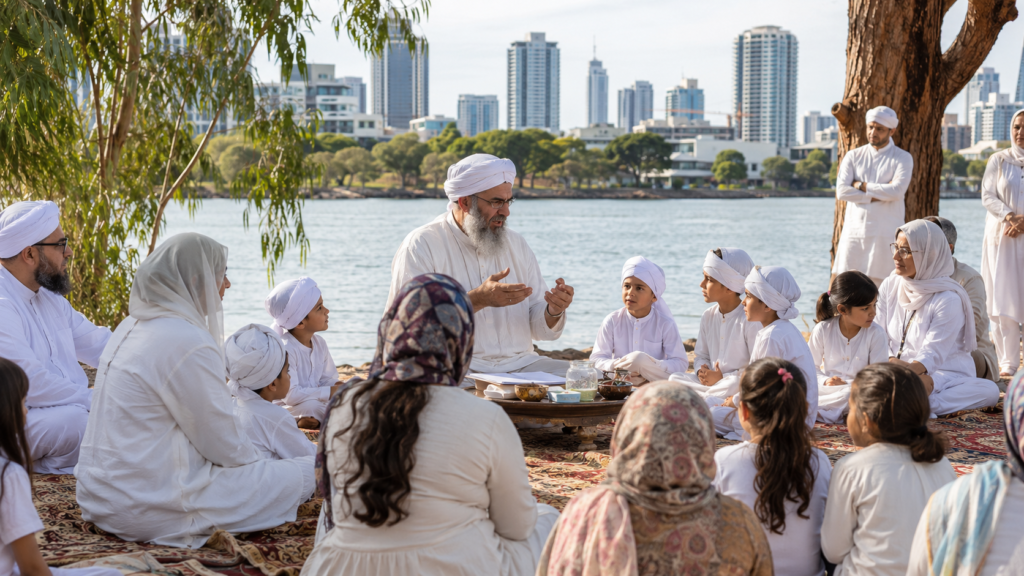
The diaspora has forced adaptations that would have been unthinkable a generation ago. In Sweden, where the rivers freeze in winter, Mandaeans perform their weekly baptism rites in heated indoor pools. In Sydney and San Antonio, community associations maintain mandis (houses of worship traditionally built beside flowing water) and run language classes to keep Mandaic alive among children who are growing up speaking English, Swedish, or German as their first language.
The question of conversion deserves attention: Mandaeans traditionally accept no converts and do not consider children of mixed marriages to be part of the faith. This closed-community structure preserved their distinctiveness across millennia. In diaspora, it also dramatically accelerates demographic decline — a theological principle designed for survival is becoming a mechanism of extinction.
Nuances, Counterpoints, and Open Questions
The picture is not entirely bleak. Scholars note several reasons for cautious optimism.
The priesthood, which came close to collapse in the early 2010s as religious leaders fled Iraq, is being rebuilt. Younger Mandaean academics in Australia, Sweden, and the United States are leading preservation efforts — digitising manuscripts, creating online language resources, and translating sacred texts into English and other languages. The publication of Häberl and McGrath’s scholarly Mandaean Book of John in 2019 was a landmark moment, bringing a central Mandaean text into accessible English for the first time.
A genuine internal debate is also underway within Mandaean communities worldwide about whether the endogamy rule — no converts, no intermarriage — can survive the diaspora context. Some voices argue for reform; others insist that the rule is inseparable from Mandaean identity itself. This is not a new tension, but it has become urgent. As Dr. Häberl put it, the community is asking whether it can change without ceasing to exist.
Contested scholarly questions also remain. The precise origins of Mandaeism — whether Palestinian, Mesopotamian, or some synthesis — are still debated. The relationship between Mandaeism, early Jewish baptismal movements, and the historical John the Baptist is genuinely unresolved, and new manuscript discoveries could reshape the picture. Some researchers have also proposed connections to the Dead Sea Scroll communities of Qumran, though this remains speculative.
What is not in dispute is the urgency. In 2025, Mandaean families are still leaving Iraq. The last Gnostics on earth are still counting their losses.
Conclusion
Two thousand years of unbroken tradition. A living language older than most European nations. Texts that scholars of early Christianity and Judaism would give anything to study in depth. And a community small enough to fit inside a mid-sized football stadium, scattered across five continents, conducting their ancient rites in suburban swimming pools.
The Mandaeans are a reminder that religion is not simply a set of beliefs — it is a civilisation in miniature, with its own language, literature, law, craft, music, and memory. When a tradition like this disappears, it does not merely leave a gap in the census. It leaves a permanent silence where two thousand years of human experience once spoke.
The question the Mandaean story poses to the rest of us is not simply academic. It is: how much of the past — and which voices from the past — do we consider worth preserving? The answer the world has given so far, measured in Mandaean graves and empty mandis, is not a comfortable one.
🔑 KEY TAKEAWAYS
- The Mandaeans are the world’s last surviving Gnostic religion, tracing their origins to the first century CE, with a theology centred on John the Baptist as the greatest prophet.
- Their primary practice — full-immersion baptism in flowing water (masbuta) — is performed repeatedly throughout a believer’s life, not as a one-time sacrament.
- The 2003 US-led invasion of Iraq triggered a catastrophic collapse: Iraq’s Mandaean community fell from 60,000–70,000 to fewer than 5,000 within four years.
- Today, the largest Mandaean populations live in Australia (~15,000), the USA (~12,000–15,000), and Sweden (~13,000); in 2025, families are still leaving Iraq.
- The community faces a structural survival dilemma: its traditional rule of no conversions and no intermarriage, which preserved identity for millennia, now accelerates demographic decline in diaspora.
Frequently Asked Questions
What is the Mandaean religion?
Mandaeism is the world’s oldest surviving Gnostic religion, practised by a community known as the Mandaeans. It is a monotheistic faith centred on ritual baptism in flowing water, the veneration of John the Baptist as the greatest prophet, and a cosmology that divides existence into realms of light and darkness. Its sacred scriptures, written in Classical Mandaic (an Aramaic dialect), date to the 2nd–7th centuries CE.
Do Mandaeans worship John the Baptist?
Mandaeans do not worship John the Baptist in the way that Christians worship Jesus. They regard him as the greatest and last true prophet — a teacher who exemplified spiritual purification through water and direct knowledge of God. He occupies in Mandaeism roughly the role that Muhammad holds in Islam: the final and most authoritative human guide to the divine.
Where do Mandaeans live today?
Most Mandaeans now live in diaspora communities outside their historic homelands. The largest concentrations are in Australia (approximately 15,000, mostly around Sydney), the United States (12,000–15,000), and Sweden (around 13,000). Fewer than 2,000 remain in Iraq, and the community in Iran has also dwindled sharply due to religious persecution.
Why are the Mandaeans called “the last Gnostics”?
Every other Gnostic movement from late antiquity — including the Valentinians, Sethians, Marcionites, and medieval Cathars — eventually died out. The Mandaeans have maintained an unbroken religious and cultural continuity for approximately two thousand years. They are the only community alive today that can claim direct descent from the ancient Gnostic world, still practising rituals and reading texts from that era.
What happened to Mandaeans after the 2003 Iraq invasion?
The US-led invasion of Iraq in 2003 triggered a humanitarian catastrophe for the Mandaean community. Already a vulnerable minority, they were targeted by Sunni and Shi’a militant groups and branded as unbelievers. Their pacifist doctrine — which forbids armed self-defence — left them defenceless. By 2007, the Iraqi Mandaean population had plummeted from roughly 60,000–70,000 to approximately 5,000. UNESCO listed their language as endangered in 2006.
Can someone convert to Mandaeism?
Traditionally, no. Mandaeism is a closed, endogamous religion: it does not accept converts, and children of marriages with non-Mandaeans are not considered members of the faith. This rule, which helped preserve Mandaean distinctiveness over two millennia of minority existence, is now the subject of internal debate within diaspora communities, where maintaining a sufficient pool of eligible marriage partners is becoming increasingly difficult.
Is the Mandaic language still spoken?
Classical Mandaic survives as a liturgical language used in religious ceremonies. Neo-Mandaic, a modern spoken variant, is still used by some elderly and middle-aged Mandaeans in Iran and Iraq, but UNESCO classifies it as seriously endangered. In diaspora communities, community associations and Mandaean academics are leading efforts to teach Mandaic to younger generations who have grown up speaking English, Swedish, German, or Arabic as their first languages.
Sources & further reading:
- Mandaean Diaspora — Mandaepedia (Miraheze)
- Sabian Mandaeans in Iraq — Minority Rights Group
- Mandaeanism — Encyclopaedia Iranica
- This tiny minority of Iraqis follows an ancient Gnostic religion — The Conversation
- Mandaeism or the Forgotten Monotheism — Fanack
- The Mandaeans: An Endangered Minority of the Middle East — Academia.edu
- Häberl, C.G. & McGrath, J.F. (2019). The Mandaean Book of John. De Gruyter.