Table of Contents
On the morning of May 6, 1527, 189 men stood between 20,000 mutinous imperial soldiers and the leader of the Catholic world. Armed with halberds and swords, they held their ground outside St. Peter’s Basilica as Rome burned around them. By nightfall, 147 of them lay dead — but Pope Clement VII had escaped.
That act of collective sacrifice is still commemorated every year at the Vatican. New guards swear their oath on that same date. And the men filling those ranks are always, without exception, from Switzerland.
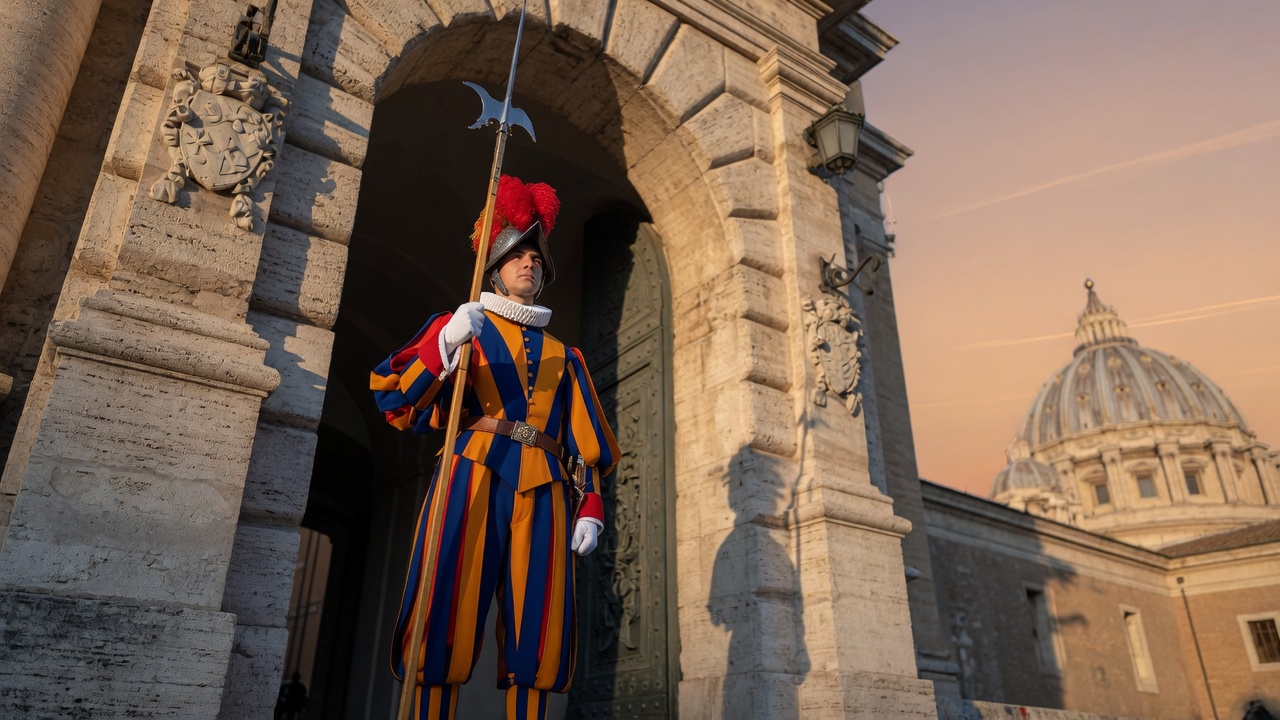
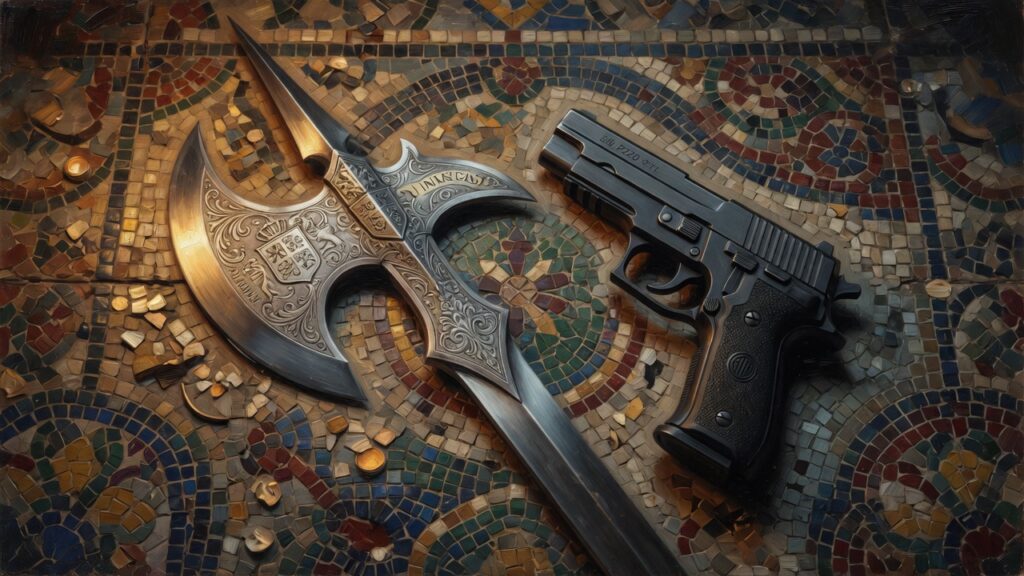
More than five centuries after Pope Julius II first opened the Vatican’s gates to a column of 150 Swiss soldiers, the Pontifical Swiss Guard remains one of the oldest continuously operating military units on earth. They still wear Renaissance uniforms. They still swear the same oath. And beneath those vibrant doublets, they carry modern SIG pistols.
Why Swiss? Why still? And what does this 519-year-old institution reveal about loyalty, sacrifice, and the enduring power of tradition?
Why the Swiss? The Origins of Europe’s Most Feared Soldiers
To understand why a 16th-century pope chose Swiss soldiers — and why the Vatican has never stopped — you need to understand what Switzerland was during the Renaissance. It was poor. The Alps produced almost no agricultural surplus, few minerals, and no significant trade routes. What the Swiss did have was young men who trained relentlessly and fought as if their lives depended on it, because they often did.
Swiss mercenaries, known as Reisläufer (“those who go to war”), dominated European battlefields from approximately 1315 to 1515 — a remarkable two-century run of near-invincibility. Their signature formation was the pike square: dense columns of around 100 men armed with long steel-tipped spears and the fearsome halberd — an axe blade fused to a spike, mounted on a six-foot shaft. Moving in tight formation at speed, the Swiss pike square was virtually unstoppable against cavalry and nearly suicidal for any infantry who dared face it head-on.
What set them apart was not raw strength but discipline and a calculated ruthlessness. Swiss soldiers famously refused to take prisoners. They carried no baggage train, foraged quickly, and moved faster than any army of the era. The Valois King of France reportedly believed it impossible to enter battle without Swiss pikemen in his vanguard. In Shakespeare’s Hamlet, the King of Denmark cries out for his “Switzers” to guard the door — a casual literary reference that reveals how deeply the Swiss mercenary had been woven into European consciousness.
💬 “The Helvetians are a people of warriors, famous for the valour of their soldiers.” — Tacitus, ancient Roman scholar
By the early 16th century, the Swiss cantons had systematised this martial economy. Local governments negotiated formal contracts — capitulations — with foreign powers, providing ready-made units of trained soldiers for a fixed fee. The cantons took a cut; individual soldiers received steady wages. France alone employed over 12,000 Swiss mercenaries by 1740; at the peak of the Austrian War of Succession, more than 20,000 Swiss soldiers operated across Europe simultaneously. Warfare-as-export-industry.
Yet there was a deeper reason Julius II chose Swiss soldiers above all others: political neutrality. The Italian peninsula of the early 16th century was a chessboard of competing powers — France, Spain, Venice, Milan, the Holy Roman Empire. The pope needed a protector with no territorial ambitions and no allegiance to any rival sovereign. The Swiss cantons wanted money, not Italian land. Their loyalty ran directly and solely to the employer who held their contract.
In 1505, Swiss bishop Matthäus Schiner proposed to Pope Julius II the creation of a permanent Swiss corps under direct papal control. On January 22, 1506, the first contingent of 150 Swiss soldiers, led by Captain Kaspar von Silenen, marched through the Porta del Popolo into Rome. Julius II titled them “Defenders of the Church’s Freedom.” The Pontifical Swiss Guard was born.
May 6, 1527: The Sacrifice That Forged the Guard’s Identity
For twenty-one years after their founding, the Swiss Guard served without facing a true test of their oath. Then came the morning that the Guard still marks as the defining event of its entire institutional existence.
By 1527, Pope Clement VII had made a fateful political miscalculation. Siding with France in the League of Cognac against Holy Roman Emperor Charles V, he found himself on the losing side of a war. The imperial forces had not been paid in months. Facing mutiny, the Emperor’s commanders offered their men the richest prize in Christendom: Rome itself.
On May 6, nearly 20,000 hungry, desperate soldiers stormed the city walls. Rome’s militia crumbled within hours. The Duke of Bourbon leading the charge was shot and killed, but the men he had brought swept into the city unrestricted. The Vatican district fell. The last organised line of defence stood outside St. Peter’s Basilica — 189 Swiss Guards under Captain Kaspar Röist.
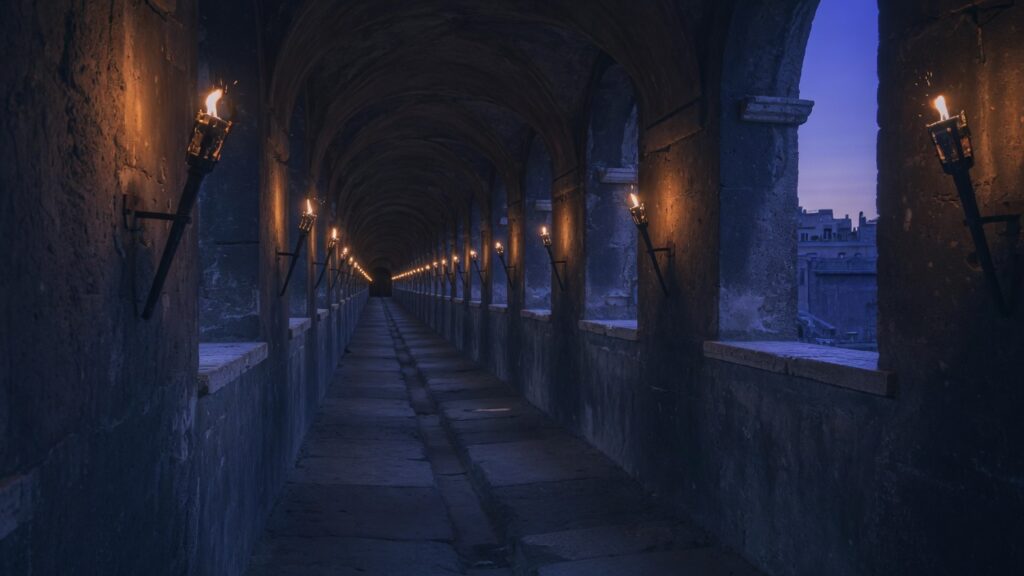
Outnumbered more than a hundred to one, they held. Röist fell in the fighting. The guards drew the enemy into close combat, absorbed fire, and cut off escape routes long enough for a selected 42 of their number — deemed essential for the pope’s immediate survival — to break away and escort Clement VII through the Passetto di Borgo, an 800-metre fortified elevated corridor connecting the Vatican Palaces to the massive fortress of Castel Sant’Angelo. Forty-two guards and one pope emerged at the far end. One hundred and forty-seven guards did not.
The sheer scale of the sacrifice is what made it legendary. The men who died were not buying time for a retreat in the ordinary sense. They were absorbing the full weight of 20,000 soldiers so that 42 of their brothers could get one man — the pope — to safety. They did it with no possibility of survival and no hope of reinforcement. They did it anyway.
📌 KEY INSIGHT BOX
May 6, 1527 is not merely a date in the Swiss Guard’s history — it is the date on which every new recruit swears the oath, every year, to this day. The annual ceremony in the San Damaso Courtyard is designed to make the oath feel continuous with that sacrifice. When a young Swiss man raises his hand and swears to give his life for the Supreme Pontiff if necessary, he is standing, symbolically, with the 147 dead of 1527.
The event had enormous geopolitical consequences. Rome’s population collapsed from approximately 54,000 to around 11,000 in the aftermath; the Sack effectively ended the High Renaissance in the Eternal City and marked the beginning of Spanish dominance over Italian political life. For the Swiss Guard, however, it was something else entirely: a founding myth written in blood. It transformed a service contract into a covenant.
A 519-Year Timeline: From Alpine Warriors to Modern Bodyguards
The Guard’s history is not a static tradition but a sequence of adaptations. Each century demanded that the institution redefine what protecting the pope actually required.
THE PONTIFICAL SWISS GUARD — KEY MILESTONES
| Year | Event |
|---|---|
| 1315 | Battle of Morgarten: Swiss infantry defeats armoured Habsburg cavalry; the Swiss military reputation is born |
| 1474–1477 | Burgundian Wars: Swiss pikemen defeat Charles the Bold, cementing their status as Europe’s finest soldiers |
| 1506 | January 22: 150 Swiss soldiers under Captain Kaspar von Silenen enter Rome; Pope Julius II founds the Pontifical Swiss Guard |
| 1527 | May 6: Sack of Rome — 147 of 189 Guards die defending Pope Clement VII; the oath day is set on this date permanently |
| 1527–1870 | The Guard is briefly dissolved after the Sack, restored under later popes, and operates alongside other papal military forces |
| 1851 | Switzerland officially bans all foreign mercenary recruitment — the Vatican Guard is explicitly exempted as a diplomatic tradition |
| 1870 | Italian unification dissolves all papal armies; the Swiss Guard remains as the sole Vatican military force |
| 1914 | Commander Jules Repond redesigns the Guard’s ceremonial uniform, drawing on 16th-century Renaissance motifs and earlier Guard attire |
| 1970 | Historical armour restricted to the May 6 oath ceremony; the Guard fully modernises its tactical and firearms training |
| 2015 | Pope Francis raises the Guard’s strength from 110 to 135, responding to increased security demands after European terror attacks |
| 2022 | Plans announced for a new ~$60 million barracks, designed to accommodate female guards if the Vatican approves |
| 2025 | Pope Francis dies in April; the May 6 ceremony is moved to October 4. A new formal uniform is unveiled for non-ceremonial occasions |
The 1870 reorganisation deserves particular attention. When Italian unification swept away the Papal States, every other papal military force was dissolved. The Swiss Guard, with its proven loyalty across three and a half centuries, was the institution that survived the pruning. That is not an accident of sentiment — it is the result of sustained institutional credibility, earned across generations and paid for in 1527.
What the Pontifical Swiss Guard Actually Does in 2026
A common misperception frames the Swiss Guard as purely ceremonial — a colourful photo opportunity for St. Peter’s Square tourists. The reality is considerably more serious.
The 135 guardsmen split their duties between ceremonial and operational roles. On any given day, some stand watch at the Vatican’s entry points in Renaissance doublets and plumed helmets. Others, in plainer dark-blue uniforms, perform active security duties: manning access control points, monitoring the Apostolic Palace, and accompanying the pope on international travel. Under their cloaks, they carry SIG P220 pistols; they are trained on the SIG SG 550 assault rifle — the same weapons used by the Swiss Army, which every guard already knows from mandatory Swiss military service.
New recruits train for six weeks at a Swiss police academy before assuming duties. According to historian David Alvarez, author of The Pope’s Soldiers: A Military History of the Modern Vatican, training has shifted substantially toward self-defence, unarmed combat, and firearms proficiency. The halberd is still carried and trained — it remains an effective crowd-control instrument in tight corridors — but it is not the primary tool of a modern protective detail.
💬 “I swear that I will faithfully, loyally and honorably serve the Supreme Pontiff and his legitimate successors, and dedicate myself to them with all my strength, sacrificing, if necessary, my life to defend them.” — The Pontifical Swiss Guard oath, read aloud by the chaplain in German each swearing-in day
The Guard collaborates closely with the Gendarmerie Corps of Vatican City, which handles general law enforcement across the 44-hectare state, while the Swiss Guard focuses on the personal protection of the pope. When a pope travels, advance teams visit the destination to plan and coordinate with local security forces. During Pope Francis’s 2021 trip to Iraq, British intelligence alerted Iraqi police to two suicide bombers heading toward papal events — they were intercepted before reaching the crowd. This is the operational reality behind the ceremonial pageant.
In 2025, the logistical demands reached a new peak. The death of Pope Francis in April, the subsequent conclave, and the Jubilee Year all fell simultaneously. The Guard’s 135 members were stretched to near-capacity; guards anticipated extra shifts on days off months in advance. The swearing-in ceremony, normally May 6, was moved to October 4 — only the second time in modern memory that the date had shifted. That same year the Guard unveiled a new formal uniform: a black wool jacket with two rows of gold buttons, yellow cuffs, and a mustard Mao-style collar, reserved for diplomatic receptions and formal non-ceremonial occasions.
Their salary — approximately €1,300–1,500 per month, tax-free, with free housing — is modest by European standards. Guards speak of the role less in financial terms and more as a vocation: the proximity to the pope, the weight of history, the oath that has been taken by thousands of young Swiss men across five centuries, each one aware of what the 147 of 1527 paid for it.
Nuances, Counterpoints & What Comes Next
The Swiss Guard is not without its tensions and genuinely open questions.
The most actively debated is gender. Since 2021, plans for the new barracks have explicitly incorporated provisions for female housing. Foundation president Jean-Pierre Roth confirmed this design intention; a spokesperson for the Guard acknowledged that the new building would technically permit women’s integration. The practical barrier that had long been cited — communal housing with no private quarters — is being resolved by the construction itself. The decision, however, belongs exclusively to the pope, and as of mid-2026, no such ruling has been made or announced.
Critics observe an inherent tension in the Guard’s persistent exclusivity. An institution that protects a pope who championed female leadership across Vatican administration continues to recruit only unmarried Swiss Catholic males aged 19–30 with a minimum height of 5 feet 8.5 inches. Sustaining even 135 members requires recruiting 30–35 new guards annually — a constant pressure that Guard leadership has openly acknowledged strains their pipeline.
Questions of historical accuracy also surface around the Guard’s familiar iconography. The vibrant striped ceremonial uniform is widely attributed to Michelangelo, but historians find little documentary support for this. The current design was largely codified by Commander Jules Repond in 1914. Similarly, the colours — red, dark blue, and yellow — are often linked to the Medici family coat of arms, which is plausible but not definitively documented.
What is not in dispute is that the institution continues to draw men who regard the Guard as a life-defining calling, not a historical curiosity with a tourism function attached.
Conclusion
The Pontifical Swiss Guard endures not because tradition is inert but because it has proven, repeatedly, that it serves a genuine purpose. From the discipline of the Alpine Reisläufer to the mass sacrifice of May 6, 1527, to modern firearms training at Swiss police academies, the Guard has never stopped being what Julius II designed it to be: a force committed, above all else, to the survival of the person it protects.
Five hundred and nineteen years of unbroken service is a remarkable statistic, but it obscures something more interesting — the institution’s capacity to absorb centuries of change without losing its foundational identity. Renaissance uniforms and SIG pistols are not a contradiction; they are a statement about what the Guard genuinely values. The past is not preserved for its own sake but because the past is the source of the oath.
The question worth sitting with is not why the pope still has a Swiss guard. It is whether any institution today could earn the same quality of trust over five centuries — and what that would actually require of the people inside it.
🔑 KEY TAKEAWAYS
- The Pontifical Swiss Guard was founded on January 22, 1506 by Pope Julius II, who chose Swiss soldiers specifically for their combination of military excellence, proven loyalty, and political neutrality toward all Italian and European powers.
- The Guard’s identity was permanently shaped on May 6, 1527, when 147 of 189 guardsmen died during the Sack of Rome to secure Pope Clement VII’s escape — a sacrifice commemorated annually by swearing in new recruits on that exact date.
- Today’s 135 guards are active security professionals: they carry SIG P220 pistols and SIG SG 550 assault rifles, train at Swiss police academies, and coordinate with international intelligence services when the pope travels abroad.
- Swiss exclusivity is a deliberate design feature, not an anachronism — it ensures political neutrality, a shared military training culture, and a corps whose oath runs to the pope alone with no competing national allegiance.
- The Guard is actively evolving: a new ~$60 million barracks designed to potentially accommodate female guards is under construction, and the institution is expanding its social media presence and recruitment outreach to maintain its strength of 135.
Frequently Asked Questions
Why does the Vatican use Swiss Guards instead of Italian soldiers?
The Swiss Guard was chosen in 1506 because Swiss soldiers had no political stake in Italian power struggles, making them genuinely neutral allies. Their loyalty ran directly to their employer — the pope — with no competing sovereign to answer to. Combined with centuries of demonstrated sacrifice, particularly during the 1527 Sack of Rome, that political neutrality explains why the Pontifical Swiss Guard has never been replaced with an Italian or multinational force.
Who founded the Swiss Guard at the Vatican?
Pope Julius II founded the Pontifical Swiss Guard on January 22, 1506, following a proposal by Swiss bishop Matthäus Schiner, who brokered the arrangement with the Swiss Confederacy. The first contingent of 150 soldiers was led by Captain Kaspar von Silenen. Julius II titled them “Defenders of the Church’s Freedom.” The founding date is still celebrated as the Guard’s official anniversary.
What happened to the Swiss Guard during the Sack of Rome in 1527?
During the Sack of Rome on May 6, 1527, 189 Swiss Guards defended the Vatican against nearly 20,000 imperial soldiers. One hundred and forty-seven guards died in the fighting, but their resistance bought enough time for Pope Clement VII to escape through the Passetto di Borgo corridor to Castel Sant’Angelo. The anniversary of their sacrifice is now the date on which every new guard swears the oath of allegiance each year.
What are the requirements to join the Pontifical Swiss Guard?
Candidates must be unmarried Swiss male citizens, Roman Catholic, aged 19–30, at least 5 feet 8.5 inches tall, and must hold a high school diploma or professional certificate. They must also have completed basic training with the Swiss Armed Forces and possess an unblemished personal reputation. Accepted guards serve a minimum of 26 months. Marriage requires being at least 25, having served five years, holding corporal rank, and committing to three more years of service.
Do Swiss Guards carry real, modern weapons?
Yes. While the Pontifical Swiss Guard is famous for ceremonial halberds, guards on active protective duty carry the SIG P220 pistol and are trained on the SIG SG 550 assault rifle — the same weapons issued to the Swiss Army. New recruits complete six weeks of training at a Swiss police academy before assuming duties. According to military historian David Alvarez, the Guard’s training has increasingly emphasised self-defence, unarmed combat, and firearms proficiency.
Is the Swiss Guard really the world’s smallest army?
The Pontifical Swiss Guard — currently 135 members strong — is widely described as the world’s smallest army, though it operates more precisely as an elite personal protection unit and ceremonial guard for a sovereign micro-state. No other sovereign entity maintains an active uniformed military force of smaller size or comparable historical continuity. The Guard was established in 1506, making it one of the oldest continuously operating military units on earth.
Will women ever be allowed to join the Swiss Guard?
The question is genuinely unresolved. A new ~$60 million barracks under construction as of 2026 was explicitly designed to accommodate female guards — removing the longstanding practical obstacle of communal housing. Foundation president Jean-Pierre Roth confirmed this design intent. However, admitting women to the Guard requires a direct decision by the reigning pope, and as of mid-2026, no such decision has been announced or is known to be under active consideration.
Sources & further reading:
- Pontifical Swiss Guard — Official Vatican Profile
- Swiss Guards — Encyclopaedia Britannica
- The Sack of Rome (1527) — Encyclopaedia Britannica
- The Changing of the Swiss Guard — America Magazine, January 2026
- Swiss Mercenaries — Wikipedia