Table of Contents
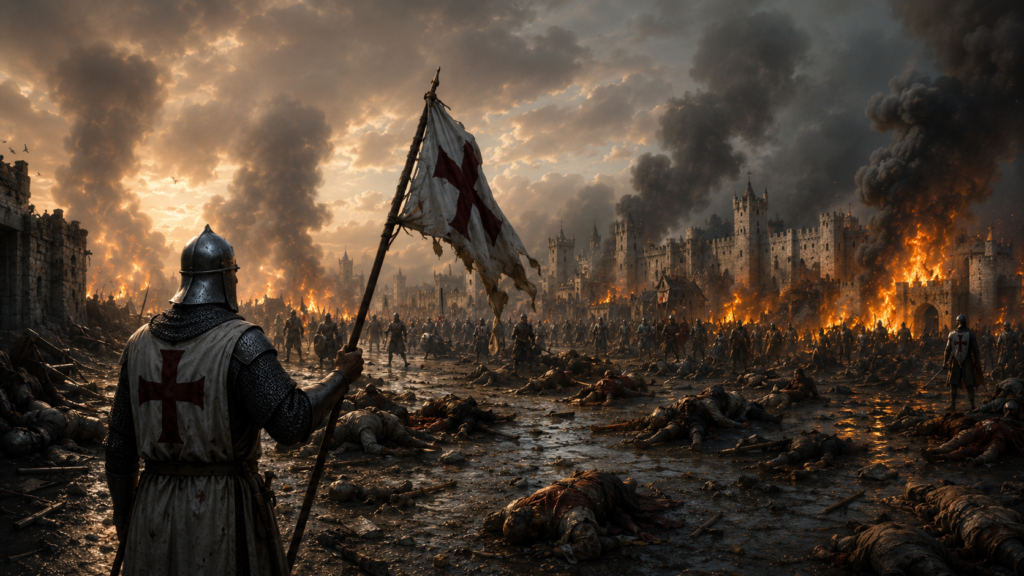
On the morning of July 22, 1209, the soldiers of a papal army stood outside the walls of Béziers in southern France. They held a list of 222 names — the known Cathars living inside the city. The Catholic residents of Béziers could have surrendered those names. Instead, they refused to betray their neighbors. When the walls fell, the legate commanding the army allegedly gave an instruction that has echoed across eight centuries: Kill them all. God will know His own.
Whether or not those exact words were ever spoken, what followed was total. Within hours, between ten and twenty thousand people lay dead — heretics, orthodox Catholics, Jews, women, and children together. The city burned for three days.
This is the story of the Cathars: a faith that flourished across southern France for over a century, built its own church, ordained its own clergy, and offered a compelling alternative to Roman Catholicism — until a crusade was called not against Muslims in the Holy Land but against Christians on European soil. What the crusade began, the Inquisition finished. By the mid-14th century, Catharism had been erased so completely that historians spent generations arguing about whether it had really existed at all.
Who Were the Cathars? Faith, Structure, and Appeal
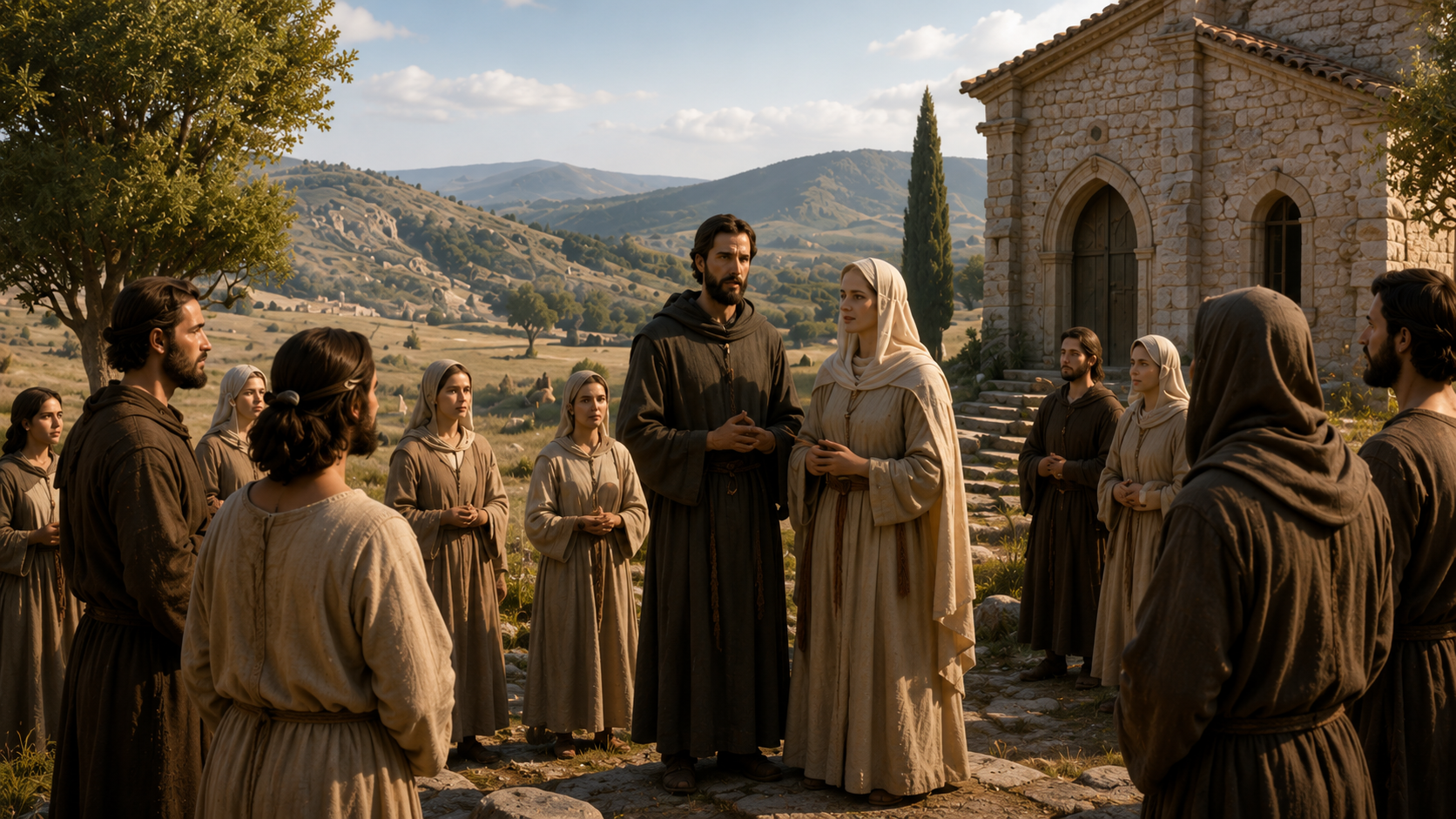
The Cathars — a name derived from the Greek katharoi, meaning “the pure ones” — were a dualist Christian movement that emerged in the Languedoc region of what is now southern France around the mid-12th century. They called themselves something far simpler: Bons Hommes and Bonnes Femmes — Good Men and Good Women. The label “Cathar” was the Church’s word for them, not their own.
Their theology broke fundamentally with Rome on one central premise. Where the Catholic Church taught that a single, all-powerful God had created both the spiritual and material worlds, the Cathars held that two forces governed existence: a benevolent god of light and spirit, and a malevolent god — identified with Satan — who had created the corrupt, suffering material world. This framework, rooted in earlier traditions including the Bulgarian Bogomils and, more distantly, Persian Manichaeism, explained pain, evil, and the suffering of innocent people in ways that medieval Catholicism often struggled to address.
The Cathar community operated on two tiers. The Perfecti (or Parfaits in French) were the spiritual elite: they had received the consolamentum, a ritual spiritual baptism, and lived under strict vows of poverty, celibacy, and vegetarianism. They owned nothing, charged nothing, and traveled in same-sex pairs ministering to their communities. The Credentes, or Believers, were the far more numerous ordinary followers who lived conventional lives but supported the Perfecti and hoped to receive the consolamentum on their deathbeds, which would secure their soul’s escape from the cycle of reincarnation.
What made Catharism genuinely dangerous to Rome was not its metaphysics alone. It was its appeal. In an era when Catholic bishops accumulated vast wealth, collected taxes, and presided over a notoriously corrupt lower clergy, the Perfecti’s austere poverty was a rebuke. The faith treated men and women as spiritual equals — women could become Perfecti and administer sacraments, a radical departure from Catholic practice. It demanded nothing of its ordinary believers that medieval peasants could not provide. Unsurprisingly, by the late 12th century, Catharism had spread through much of the Languedoc, found protectors among the local nobility, and had established its own network of bishoprics.
💬 “The Cathar priests lived simply, had no possessions, imposed no taxes or penalties, and regarded men and women as equals — aspects of the faith which appealed to many at the time disillusioned with the Church.” — World History Encyclopedia
The Crusade: When Rome Turned on Its Own Flock
Pope Innocent III had tried patience first. Throughout the 1190s and into the early 1200s, he dispatched preaching missions to the Languedoc, hoping theological persuasion would draw Cathars back to Rome. One of those preachers, a Spanish priest named Domingo de Guzmán, would later found the Dominican Order — created specifically to combat heresy through reasoned argument. The missions failed. Local lords, including Raymond VI, Count of Toulouse, protected the Cathars and showed little appetite for persecution.
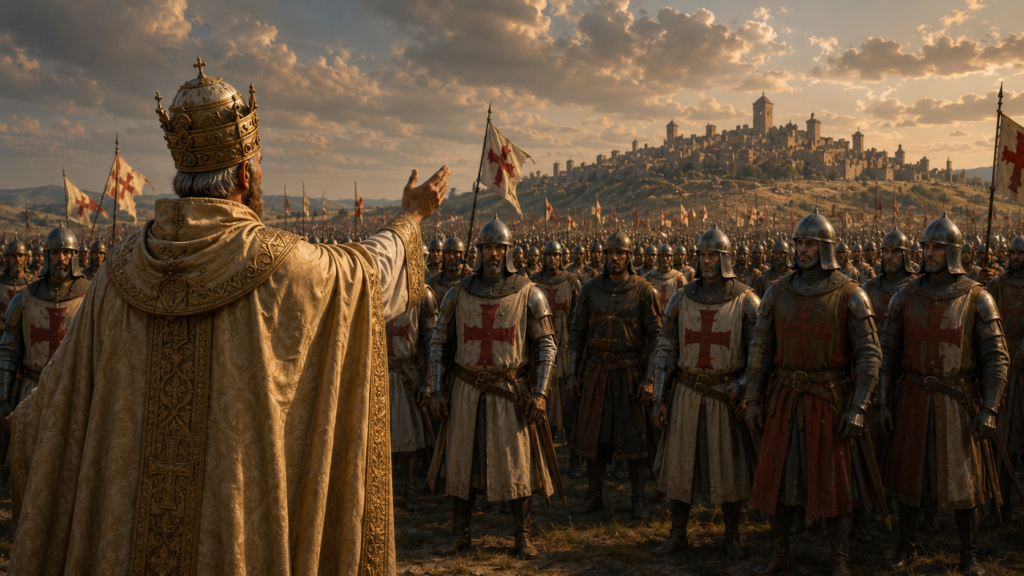
The trigger for war came on January 14, 1208, when a servant of Raymond VI murdered the papal legate Peter of Castelnau. Whether Raymond ordered the killing remains historically disputed, but Innocent III seized the moment. He declared a crusade — the first in European history directed not at Muslims but at fellow Christians — and offered the same spiritual indulgences to participants as those who fought in the Holy Land. Crucially, he added a material incentive: the lands of convicted heretics were forfeit and could be claimed by crusaders.
📌 KEY INSIGHT
The Albigensian Crusade was the first armed crusade in history directed against fellow Christians living within Europe. It set a precedent — that the Church could mobilize military force against internal dissent — that would shape religious policy for centuries. Raphael Lemkin, the scholar who coined the word genocide in the 20th century, specifically cited this crusade as one of his defining historical examples.
An army of perhaps 10,000 northern French knights and soldiers marched south in the summer of 1209 under the command of Arnaud Amalric, Abbot of Cîteaux. Their first major target was Béziers — a prosperous trading city where Cathars and Catholics had coexisted for generations. The defenders refused to surrender the 222 named heretics. The crusaders breached the walls and slaughtered the population indiscriminately. Amalric’s own letter to Innocent III reported simply: “The city was put to the sword. So did God’s vengeance give vent to its wondrous rage.” He did not need to elaborate. The message was clear to every city south of the Loire: resistance meant annihilation.
After Béziers fell, Carcassonne surrendered without a fight. Simon de Montfort, a northern French baron, was appointed to lead ongoing military operations and wasted no time expanding his personal territorial holdings alongside his religious mission. The dual nature of the crusade — piety and conquest intertwined — would define the entire campaign.
Evidence, Data & Examples: A Timeline of Eradication
The Albigensian Crusade did not end in 1229 when the Treaty of Paris formally concluded its military phase. The destruction of Catharism was a project that unfolded across 112 years. The timeline below traces its major markers:
TIMELINE: The Destruction of Catharism (1165–1321)
| Year | Event |
|---|---|
| 1165 | First Cathar bishopric established at Albi; Catharism organized as a formal church |
| 1179 | Third Lateran Council condemns Catharism; urges secular lords to suppress heresy |
| 1208 | Assassination of papal legate Peter of Castelnau; Innocent III declares crusade |
| July 22, 1209 | Massacre at Béziers: 10,000–20,000 killed; Carcassonne falls weeks later |
| 1210 | Siege of Minerve: 140 Perfecti refuse to recant; burned alive |
| 1211 | Siege of Lavaur: hundreds of Cathars burned; the châtelaine Geralda thrown into a well |
| 1213 | Battle of Muret: Simon de Montfort defeats Raymond VI and King Peter II of Aragon; Peter II dies in battle |
| 1218 | Simon de Montfort killed at the siege of Toulouse — struck by a stone from a catapult operated by women defenders |
| 1229 | Treaty of Paris ends military phase; Languedoc absorbed into the French crown |
| 1233 | Pope Gregory IX establishes the Medieval Inquisition, led by Dominican friars |
| May 1243 | Siege of Montségur begins; 10,000 royal troops against ~200 defenders |
| March 16, 1244 | Over 220 Cathars walk voluntarily into a mass bonfire at Montségur rather than renounce their faith |
| 1321 | Guillaume Bélibaste, last known Cathar Perfectus, burned at the stake |
| ~1350 | All discernible traces of organised Catharism eradicated |
What this timeline reveals is that the military crusade was only the opening act. The Treaty of Paris in 1229 ended open warfare but delivered the Languedoc and its population to the Inquisition. From 1233, Dominican inquisitors systematically worked through village after village, recording testimony, issuing sentences, and burning those who would not conform. Suspects who wore yellow crosses as penance, confessed heretics who informed on their neighbors, and ordinary villagers caught possessing Cathar texts all entered a bureaucratic machine designed specifically to destroy a belief system root and branch — not merely to punish individuals but to make the faith itself impossible to transmit.
What the Albigensian Crusade Actually Created
The most consequential legacy of the Albigensian Crusade may not be what it destroyed but what it built in the ruins.
The Dominican Order, founded in direct response to the spread of Catharism, became one of the most influential institutions in medieval and early modern Europe. Its founding mission — combating heresy through learning and preaching — eventually produced some of the greatest scholastic theologians of the medieval world, including Thomas Aquinas. But it also supplied the personnel who ran the Inquisition, whose methods — systematic interrogation, centralized record-keeping, a formal legal framework for prosecuting thought crimes — represented something genuinely new in European governance.
💬 “The methods used to crush this movement would lay the foundation for centuries of persecution, control, and destruction. The Inquisition, created in the aftermath, would spread across Europe, wielding fear as a weapon more powerful than any army.” — History’s Greatest Battles podcast (Season 2, Episode 14)
The political geography of France was permanently altered. Before the crusade, the Languedoc was semi-independent, a world of troubadours and tolerant, polyglot courts where Occitan culture flourished alongside Arabic and Jewish intellectual life. After the Treaty of Paris, its lands passed to the French crown. The political centralization of France — the gradual absorption of semi-autonomous principalities into a unified monarchy — owes a direct debt to the crusade.
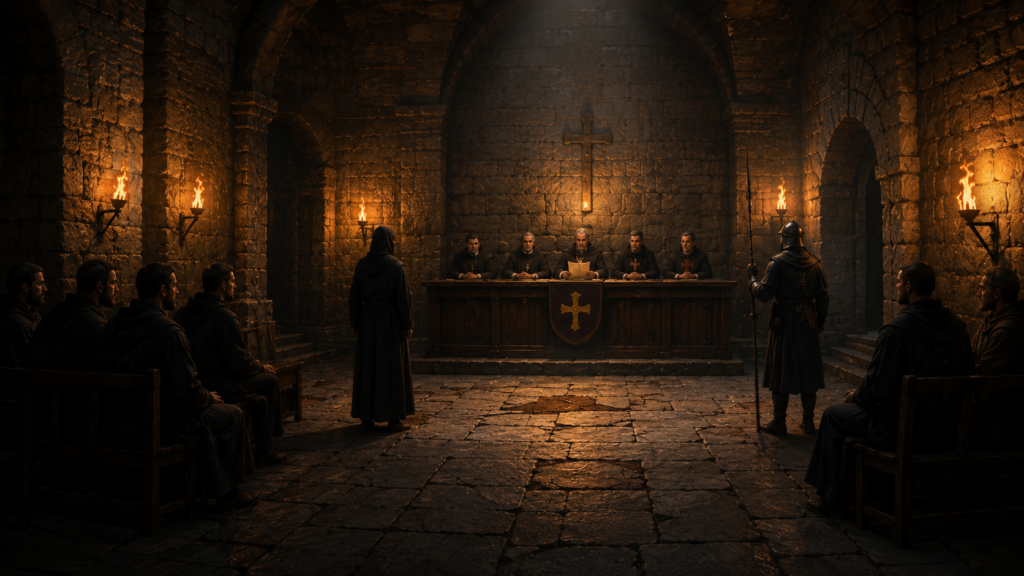
For the reader thinking about the present, the implications run deeper than politics. The Albigensian Crusade established the template for using military force not to conquer foreign territory but to impose ideological conformity within a state’s own population. It created the infrastructure of the Inquisition, which proved that a sufficiently organized institution could systematically suppress ideas rather than merely punish individuals. And it demonstrated, for the first time on European soil, that a whole culture — its language, its art, its religious practice — could be deliberately dismantled.
These are not medieval curiosities. They are the foundational experiments in what later centuries would refine into recognizable forms of ideological persecution.
Nuances, Counterpoints, and Open Questions
The history of the Cathars is, paradoxically, also a history of what historians cannot fully know.
The most significant scholarly debate concerns whether “Catharism” was ever really the unified, coherent religion that Inquisition records describe. Historian R.I. Moore, in his influential work The War on Heresy (Harvard University Press, 2012), argued that the Church largely constructed the heresy it claimed to be fighting — projecting a systematic theology onto what were, in many cases, localized expressions of dissent and anti-clerical sentiment. On this reading, many of those burned as heretics were not card-carrying members of a Cathar church but simply people who criticized corrupt priests or sheltered the neighbors the inquisitors came looking for.
More recent inquisitorial records, particularly those from the 1240s studied by scholars including Mark Pegg, suggest the opposite: that Cathar beliefs were genuinely held and genuinely distinct from Catholic orthodoxy — not invented by the Church but real, lived, and sincerely defended at the cost of life.
The famous quote attributed to Arnaud Amalric at Béziers — “Kill them all, God will know His own” — is itself disputed. It appears not in Amalric’s own letter to the pope but in a text written decades later by Caesarius of Heisterbach, a Cistercian writer known for his enthusiasm for religious exempla. The phrase may be legendary. What is not legendary is Amalric’s own account: the troops ran amok and slaughtered without distinction. The words may be apocryphal; the massacre was not.
Finally, the genocide question remains contested. While Raphael Lemkin cited the crusade as a paradigmatic example, modern genocide scholars note that the legal definition requires proof of intent to destroy a group as such, which is difficult to establish across medieval sources. The deaths were real. The eradication was real. The categorization is still argued.
Conclusion
The Cathars built something remarkable: a church without wealth, without coercion, and with a place for women at its altar. Whether their theology was philosophically coherent matters less than the fact that hundreds of thousands of people found in it an answer to the corruption and indifference they saw in the official Church. That faith was not debated out of existence. It was burned out of existence — at Béziers, at Minerve, at Lavaur, and finally at Montségur, where over two hundred men and women walked into fire rather than say words they did not believe.
What survived the Cathars was, in a grim irony, more durable than they were: the Inquisition, the template for ideological suppression, and the precedent that a crusade could be declared not against a foreign enemy but against one’s own citizens. The Albigensian Crusade asks a question that every era must answer for itself — what are we willing to do to those whose beliefs threaten the order we have built? The medieval Church answered without hesitation. The ash at Montségur is still there if you want to visit the answer.
🔑 KEY TAKEAWAYS
- The Cathars were a genuine alternative Christian religion with its own clergy, sacraments, and theology — not simply a protest movement or a Catholic invention.
- The Albigensian Crusade (1209–1229) was the first armed crusade in European history directed against fellow Christians, setting a precedent for internal ideological suppression.
- The massacre at Béziers, where an estimated 10,000–20,000 people died regardless of faith, stands as one of the most documented atrocities of the medieval world — and its famous quoted order may never have actually been spoken.
- The crusade’s most enduring legacy was institutional: it created the Dominican Order and the Medieval Inquisition, both of which shaped European religious and political life for centuries.
- Raphael Lemkin, who coined the word genocide, cited the Albigensian Crusade specifically — a designation that remains historically and legally debated but morally hard to dispute.
Frequently Asked Questions
What did the Cathars actually believe?
The Cathars believed in a dualist universe governed by two opposing forces: a good god of spirit and light and an evil god who created the corrupt material world. This led them to reject the physical sacraments of the Catholic Church, forbid meat for their clergy, and encourage celibacy. Their central ritual was the consolamentum, a spiritual baptism administered by the Perfecti, which they believed freed the soul from the cycle of reincarnation.
Why did Pope Innocent III call a crusade against the Cathars?
Pope Innocent III called the Albigensian Crusade in 1208 following the assassination of his papal legate, Peter of Castelnau, by a servant of the Count of Toulouse. Decades of preaching missions had failed to reduce Catharism’s influence, and the local nobility — including Raymond VI of Toulouse — actively protected rather than suppressed the heretics. The crusade offered both a religious solution and a political one: the promise of indulgences attracted northern knights, and confiscated heretic lands rewarded them materially.
What happened at the massacre of Béziers in 1209?
On July 22, 1209, crusader forces breached the walls of Béziers after the city’s population refused to surrender its 222 known Cathars. An estimated 10,000 to 20,000 people were killed — Catholics, Jews, and Cathars alike. The papal legate Arnaud Amalric is famously quoted as ordering “Kill them all, God will know His own,” though historians believe this line was recorded decades later by Caesarius of Heisterbach and may be apocryphal. Amalric’s own letter to the pope confirms the indiscriminate slaughter.
What was the significance of the fall of Montségur in 1244?
Montségur was the last major stronghold of the Cathar movement. After a ten-month siege by roughly 10,000 royal troops, around 220 Cathar Perfecti were given the choice of renouncing their faith or death. All chose to die. On March 16, 1244, they walked voluntarily into a mass bonfire on the plains below the fortress. The fall of Montségur is regarded as the effective end of organised Catharism, though the Inquisition continued hunting survivors for another eighty years.
Is the Albigensian Crusade considered a genocide?
Some historians and scholars do classify it as one of the earliest examples of religious genocide. Raphael Lemkin, who coined the term genocide in 1944, cited it as “one of the most conclusive cases of genocide in religious history.” The crusade killed hundreds of thousands and systematically destroyed a culture, language, and belief system. Modern genocide scholars debate whether medieval sources allow us to establish the specific legal requirement of intent to destroy a group as such, making the classification contested but historically significant.
What long-term effects did the Albigensian Crusade have on France?
The crusade permanently altered the political map of France. The semi-independent Languedoc, with its distinct Occitan culture, troubadour tradition, and relative religious tolerance, was absorbed into the French crown through the 1229 Treaty of Paris. This marked a decisive step in the centralisation of the French state. The crusade also created the Dominican Order and institutionalised the medieval Inquisition — two organisations that shaped European religious and intellectual life for centuries.
Why did Catharism appeal so widely in medieval France?
Catharism spread partly because it offered a stark contrast to what many medieval people saw as a corrupt official Church. Catholic clergy were often wealthy, poorly educated, and tax-collecting. The Cathar Perfecti, by contrast, owned nothing, charged nothing, and treated men and women as spiritual equals — a radical position for the 12th century. For ordinary believers, the faith demanded little beyond good conduct and support of the Perfecti, making it accessible where Catholic demands of confession, penance, and tithe felt burdensome.
Sources & further reading:
- Cathars — World History Encyclopedia
- Albigensian Crusade — Encyclopædia Britannica
- Massacre at Béziers — Encyclopædia Britannica
- The Albigensian Crusade in Anglo-American Historiography — Wiley/History Compass
- The Medieval Crusade Against the Cathars Supplied a Template for Modern Oppression — Jacobin