Table of Contents
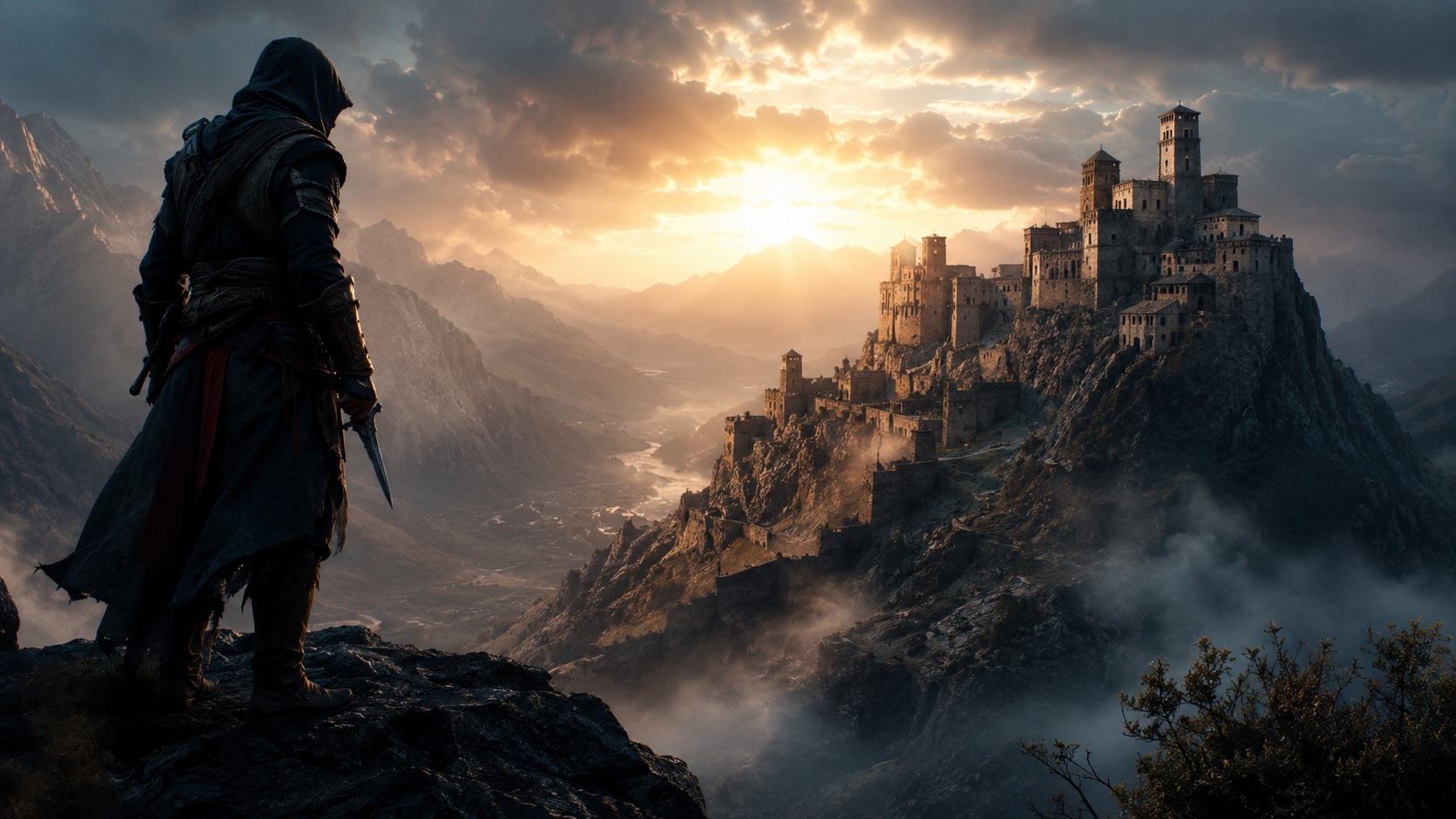
Imagine a word so charged with fear that enemies of a medieval sect invented it as a slur — and it stuck so well it became a permanent fixture of every major European language. The word is assassin. The sect is the Nizari Ismailis. And almost everything you think you know about them is wrong.
For nearly a thousand years, the “Assassins” have been portrayed as a drug-crazed cult of elite killers, brainwashed by a shadowy figure called the Old Man of the Mountain and sent out to murder on command. Video games, films, and novels have borrowed this mythology wholesale. But modern historians have now spent decades dismantling it — source by source, myth by myth.
This post separates the real history of the Assassins from the legend. You will learn who the Nizari Ismailis actually were, why the hashish story is almost certainly enemy propaganda, how a minority sect held the medieval Middle East at strategic checkmate for 166 years, and why their descendants — millions of them — are alive and thriving today.
Who Were the Nizari Ismailis? Foundations of a Misunderstood Sect
To understand the real history of the Assassins, you have to start inside a schism.
Islam split into Sunni and Shia branches in 632 CE, following a dispute over who should succeed the Prophet Muhammad. The Shia themselves then fractured further. The Ismailis emerged from a ninth-century disagreement over Shia leadership, and the Nizari Ismailis split again from the broader Ismaili branch in 1094, following a succession struggle within the Fatimid Caliphate in Cairo.
The Nizari cause found its architect in Hasan-i Sabbah, a brilliant theologian and missionary who had spent years converting followers across Persia. Facing the overwhelming military power of the Seljuk Sunni Empire — and having no conventional army to defend his community — Hasan needed an unconventional strategy. In 1090, he seized the fortress of Alamut in the Alborz mountains of northern Persia. The castle was nearly impregnable: perched on a rock at 2,100 metres, approachable by only one narrow path, and commanding the surrounding valley. It became the capital of what historians now call the Nizari Ismaili state.
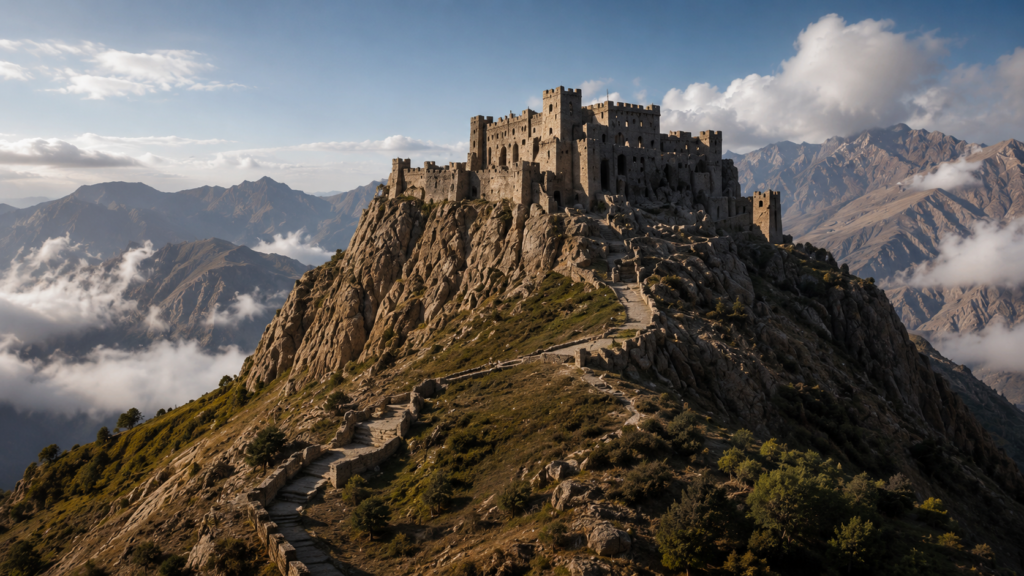
Over the next century and a half, the Nizaris expanded their network to more than 50 mountain castles across Persia and Syria. They were a small, isolated, theologically “heretical” (in Sunni eyes) sect surrounded by enemies vastly more powerful than themselves. Conventional warfare was not an option.
💬 “The Nizari Ismaili network was not a cult of killers — it was a minority community, cornered by empires, that invented a form of precision strategic deterrence centuries before the concept had a name.”
So they chose a different weapon: the targeted removal of specific enemy commanders, viziers, and rulers. The assassination of a general could collapse a campaign. The assassination of a vizier could destabilise a government. For the Nizaris, it was not terror for terror’s sake — it was arithmetic.
The Myth Machine: How a Smear Became a Word
This is the intellectual core of the Assassins’ story — and the single most important thing the real history of the Assassins reveals.
The word assassin does not mean what you think it means. In Arabic, hashishiyya (variants: hashshashin, hashishin) was a term applied to the Nizari Ismailis by their Sunni rivals. Scholars at the Institute of Ismaili Studies in London, led by Dr Farhad Daftary, have established that in every Muslim source where this term appears, it is used as a pejorative — meaning roughly “low-class rabble” or “people of lax morality.” None of these sources describe actual drug use.
The Crusaders, arriving in the Holy Land after 1099, encountered the Nizaris in Syria, heard the term hashshashin from local enemies, and took it literally. They then exported this literal interpretation back to Europe, where it morphed through Latin (assassinus, assassini) into the English word we use today.
📌 KEY INSIGHT
There is no credible historical evidence that the Nizari fighters — the fida’is — ever used hashish. The Nizaris adhered strictly to Islamic law, which prohibits intoxicants. The hashish story was almost certainly manufactured by Sunni enemies to make the sect appear heretical and their devotion appear chemically induced rather than genuine — a propaganda masterstroke that worked for eight centuries.

Then came Marco Polo. Writing his Travels around 1298 — four decades after Alamut fell, and based on secondhand accounts from a fortress he never visited — Polo described an elaborate “paradise garden” where the Old Man of the Mountain allegedly drugged young recruits, allowed them to experience paradise, then convinced them that only faithful service could return them there. It was a captivating story. It was also, as scholars now agree, almost entirely fiction.
The Lebanese scholar Amin Maalouf has even proposed an alternative etymology for the whole word: rather than hashishiyya, the name may derive from asasiyyun — “people faithful to the asas,” the theological foundation of the Ismaili faith. Under this reading, the word “assassin” is not a drug reference at all but a corruption of a term of religious devotion.
Myth vs. Reality: The Evidence
The table below summarises the most persistent myths about the Assassins and what modern scholarship actually shows:
| The Myth | The Reality | Source |
|---|---|---|
| The Assassins used hashish to motivate killers | No evidence; hashishiyya was a Sunni insult for “low-class rabble” | Institute of Ismaili Studies |
| The Old Man of the Mountain ran a secret paradise garden | Fabricated or embellished by Marco Polo, who never visited Alamut | Smithsonian Magazine, 2023 |
| The Assassins were a cult of mindless killers | They were a theologically sophisticated minority sect with a functioning state | World History Encyclopedia |
| The order was destroyed by the Mongols in 1256 | The political state fell; the religious community survived and thrives today | IIFL.org.uk, 2025 |
| “Assassin” means “hashish user” | More likely means “low-class rabble” — possibly “people of the faith foundation” | Farhad Daftary, IIS |
| They killed indiscriminately | Targets were carefully selected political and religious figures; mass violence was avoided | DIG Podcast, 2021 |
The arc of Nizari history by century:
A rough timeline of their political and cultural reach shows a sharp rise (1090–1130s), a sustained plateau of strategic power and feared deterrence (1130s–1240s), catastrophic military defeat (1256), followed by centuries of dispersal — and then a remarkable modern resurgence as a globally respected Muslim community numbering 12–15 million today.
For context on how effective targeted assassination was as a deterrent: the Nizaris held their mountain state for 166 years against the Seljuk, Abbasid, Crusader, and Ayyubid powers — all of which were militarily far superior. The strategy worked precisely because it was unpredictable, inexpensive, and did not require an army.

What the Real History of the Assassins Means for Us
The fall of Alamut to Hulagu Khan’s Mongol forces in December 1256 ended the Nizari political state. The Mongols demolished the fortress’s famous library — a catastrophic loss to Islamic scholarship — and massacred tens of thousands of Nizaris across Persia. The Mongol historian Juwayni declared the Ismaili line extinct.
He was wrong.
The Nizari Imamate survived in secret. Over the following centuries, dispersed communities rebuilt in Central Asia, Afghanistan, India, and East Africa. The institution of the Aga Khan — the hereditary Imam — continued in an unbroken line.
💬 “The very people branded as drug-crazed murderers by their medieval enemies are today among the Muslim world’s most prominent advocates for pluralism, education, and global philanthropy.”
In February 2025, Prince Rahim Al-Hussaini was installed as Aga Khan V, the 50th hereditary Imam of the Nizari Ismailis, following the death of Aga Khan IV (Prince Karim). The community he now leads spans 35 countries and 12–15 million followers. The Aga Khan Development Network runs hospitals, universities, and microfinance programmes across Asia and Africa, employing nearly 96,000 people.
For the general reader, the practical lesson is epistemological as much as historical: the most vivid, memorable version of any story — especially one told about a conquered enemy — is often the least accurate. The “Assassins” legend was assembled by people with every reason to demonise the Nizaris and no access to their own sources or perspective. Modern scholarship, drawing on recovered Ismaili texts, has had to do the painstaking work of reconstruction.
This matters beyond medieval history. Anytime a group is labelled, caricatured, and that caricature then enters popular culture — through games, films, novels — the distance between label and lived reality widens. The Assassins are an extreme case, but not a unique one.
Nuances, Counterpoints, and What Remains Debated
It would be dishonest to pretend all is settled. Historians acknowledge genuine complexity here.
The Nizaris did carry out assassinations — sometimes of civilians adjacent to their political targets, sometimes in ways that terrorised populations beyond the intended target. The political ends were real; the human costs were real. Modern scholarship’s project of rehabilitating the Nizari reputation should not tip into hagiography.
The etymology debate also remains genuinely open. De Sacy’s 18th-century derivation from hashishi remains the mainstream academic position, even as scholars like Maalouf propose the asasiyyun alternative. The honest answer is: we do not know for certain where the word came from.
There is also the question of Assassin’s Creed and popular culture. Academic Frank Bosman’s study concluded that Ubisoft’s franchise does a “remarkable — though not flawless” job of partially correcting orientalist stereotypes. It depicts the Assassins as ideologically motivated, intelligent, and morally complex — which is more than medieval European chronicles ever managed. But it still wraps everything in conspiracy mythologies that the real Nizaris would not recognise.
What’s next? With a new Aga Khan installed and the Institute of Ismaili Studies continuing to publish recovered historical texts, the scholarly reappraisal of Nizari history is ongoing. As more original Ismaili sources are translated and analysed, the gap between myth and reality will only widen further.
Conclusion
The real history of the Assassins is not the story of a drug cult. It is the story of a minority community that used precision and intelligence to survive for 166 years against overwhelming odds — and whose enemies were so threatened by them that they invented a smear campaign so effective it permanently altered the English language.
The word assassin now means “hired killer.” It began as a pejorative insult hurled at a Shia Muslim sect by their Sunni rivals, filtered through the imaginations of Crusaders and medieval European travellers, amplified by Marco Polo’s fiction, and cemented by centuries of uncritical retelling. The Nizari Ismailis, meanwhile, survived their empire’s collapse, rebuilt across continents, and exist today as a living, thriving community of millions.
Next time you use the word assassin, consider what it actually commemorates: not the act of killing, but the extraordinary power of propaganda to outlast the people it was designed to destroy.
🔑 KEY TAKEAWAYS
- The word “assassin” derives from a Sunni Arabic insult (hashishiyya) meaning “low-class rabble” — not from actual drug use, for which there is no credible evidence.
- The Nizari Ismailis used targeted assassination as a precision strategic tool to avoid conventional warfare they could not win, not as an expression of fanaticism.
- Marco Polo, who never visited Alamut, is responsible for spreading the most fantastical myths about the Assassins, including the “paradise garden” story.
- The Nizari Ismaili state lasted 166 years (1090–1256) before falling to the Mongols — but the religious community survived and today numbers 12–15 million worldwide.
- Popular culture, including Assassin’s Creed, while heavily fictionalised, is ironically more balanced in its portrayal than many medieval European historical sources.
Frequently Asked Questions
Who were the real Assassins in history?
The real “Assassins” were the Nizari Ismailis, a branch of Shia Islam founded in 1090 by Hasan-i Sabbah when he captured the mountain fortress of Alamut in northern Persia. A theologically sophisticated minority sect, they used targeted political assassinations as a strategic tool against more powerful Sunni enemies. The term “assassin” was a pejorative label applied by their opponents, not a self-description.
Did the Assassins really use hashish?
Almost certainly not. Modern scholars, including Dr Farhad Daftary of the Institute of Ismaili Studies, have established that the Arabic term hashishiyya was a pejorative insult used by Sunni rivals meaning “low-class rabble” — not a literal reference to drug use. The Nizaris followed Islamic law, which prohibits intoxicants. The hashish story was likely manufactured as propaganda to discredit them, and there is no archaeological or textual evidence supporting it.
What happened to the Assassins — are they still around?
Yes. The Nizari political state fell to the Mongols when Alamut was captured in 1256, but the religious community survived. Today, the Nizari Ismailis number approximately 12–15 million people living in over 35 countries. Their hereditary spiritual leader, the Aga Khan, leads a globally active community known for philanthropy and pluralism. In February 2025, Prince Rahim Al-Hussaini became Aga Khan V, the 50th Imam in the unbroken line.
Is Assassin’s Creed historically accurate?
Only loosely. The game is inspired by the real Nizari Ismailis and borrows authentic settings, including Masyaf castle in Syria and the broader Crusades context. However, characters like Altaïr are fictional, the Templar conspiracy is invented, and many supernatural elements have no historical basis. Academic research suggests the game is more balanced toward the Nizaris than medieval European sources — but it remains a work of creative fiction, not history.
Where does the word “assassin” actually come from?
The dominant academic view traces “assassin” through the Latin assassinus, itself derived from the Arabic hashishi (plural: hashishiyya), a pejorative applied to Nizaris by their enemies. However, the Lebanese historian Amin Maalouf has proposed an alternative: that the word derives from asasiyyun, meaning “people faithful to the foundation (asas) of the faith” — a term of religious devotion, not a drug reference. The true etymology remains debated.
Who was Hasan-i Sabbah, the “Old Man of the Mountain”?
Hasan-i Sabbah (c. 1050–1124) was the founder of the Nizari Ismaili state and an exceptionally capable theologian, military strategist, and organiser. He captured Alamut in 1090 and built a network of mountain fortresses across Persia. The “Old Man of the Mountain” title was actually applied by Crusaders to later Nizari leaders in Syria, particularly Rashid al-Din Sinan — not Hasan himself. Marco Polo’s lurid accounts of him are considered largely fictional by modern historians.
Why did the Assassins target specific individuals rather than wage war?
This was a calculated strategic choice, not fanaticism. The Nizaris were a small minority with no conventional army capable of opposing Seljuk, Crusader, or Abbasid forces in open battle. Removing key commanders, viziers, or rulers through precision assassination could destabilise entire political structures at minimal cost. It was, in essence, asymmetric warfare — the medieval equivalent of decapitation strategy — and it was effective enough to keep the Nizari state alive for over 150 years.
Sources & further reading:
- The Assassins — World History Encyclopedia
- Assassin — Institute of Ismaili Studies (Farhad Daftary)
- Islamic State and the Assassins: reviving fanciful tales — The Conversation
- The Medieval Sect That Inspired Assassin’s Creed — Smithsonian Magazine
- Who Were the Real ‘Order of Assassins’? — Arab News
- Nizari Ismaili Community Today — The Ismaili