Table of Contents
Imagine being purchased as a child, transported thousands of miles from your homeland, and handed a sword. Now imagine that this is not a sentence of misery — it is an invitation to the most powerful military aristocracy the medieval Islamic world had ever produced. Stranger still: imagine that free men beg to be enslaved so they can join you.
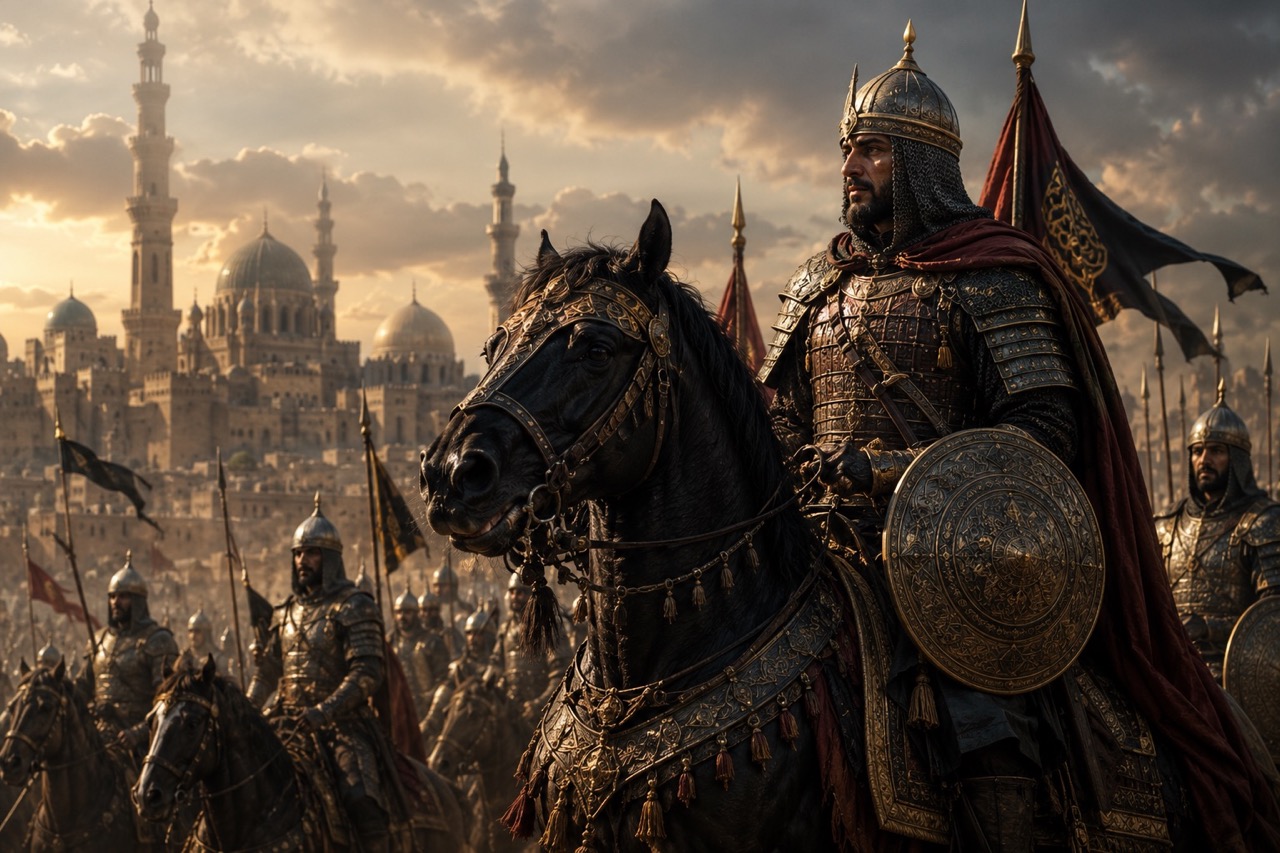
This was the world of the Mamluks. Slave soldiers who became generals. Generals who became sultans. Sultans who defeated the only army that had never lost a major battle — the Mongols. For 267 years, from 1250 to 1517, a dynasty built on purchased human beings held together the eastern Islamic world, repelled the Crusaders, and filled Cairo with architectural masterpieces still standing today.
This post traces how that extraordinary reversal happened: why the Islamic world chose slaves as its guardians, how those slaves turned guardianship into sovereignty, and what the Mamluk story reveals about power, meritocracy, and the strange alchemy of violence and civilization.
The Making of a Warrior Class: Origins of the Mamluk System
The word “Mamluk” comes from the Arabic root meaning “one who is owned” — simply, slave. But the Mamluk system was unlike ordinary slavery in almost every respect. It began not in Egypt but in ninth-century Baghdad, when the Abbasid caliph al-Mu’tasim (r. 833–842) started purchasing young male captives from the Turkic steppes of Central Asia to serve as dedicated military units directly loyal to him rather than to potentially rebellious Arab tribes.
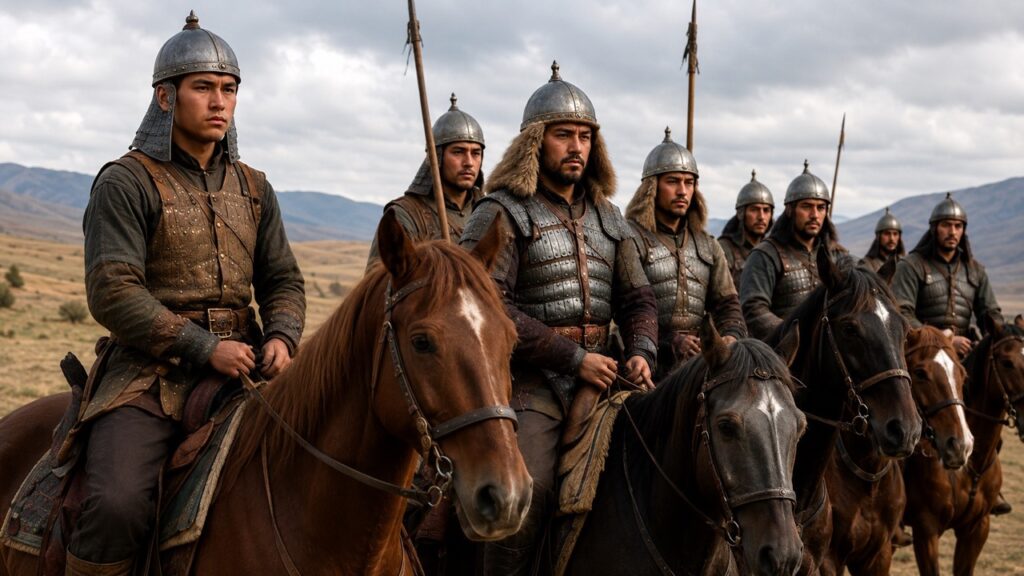
The logic was coldly rational. A soldier born into an existing tribe, clan, or ethnic group carried competing loyalties. A boy purchased from a distant land, converted to Islam, educated entirely within the palace, and trained from childhood to fight — that soldier belonged entirely to his patron. His survival, status, and identity were inseparable from the sovereign who owned him. Paradoxically, this total dependency was also total reliability.
By the thirteenth century, the practice had spread across the Islamic world. When the Kurdish general Saladin took control of Egypt in 1169 and founded the Ayyubid dynasty, he incorporated a slave-soldier corps alongside his free Kurdish, Arab, and Turkmen troops. His successors expanded the practice. The last effective Ayyubid sultan, al-Salih Ayyub (r. 1240–1249), became its most aggressive adopter. After being betrayed repeatedly by his own free troops during dynastic power struggles, he turned almost exclusively to purchased Mamluks — primarily Kipchak Turks displaced by Mongol expansion across the Eurasian steppe.
💬 “The privileges associated with being a Mamluk were so desirable that many free Egyptians arranged to be sold in order to gain access to this privileged society.” — Military History Fandom
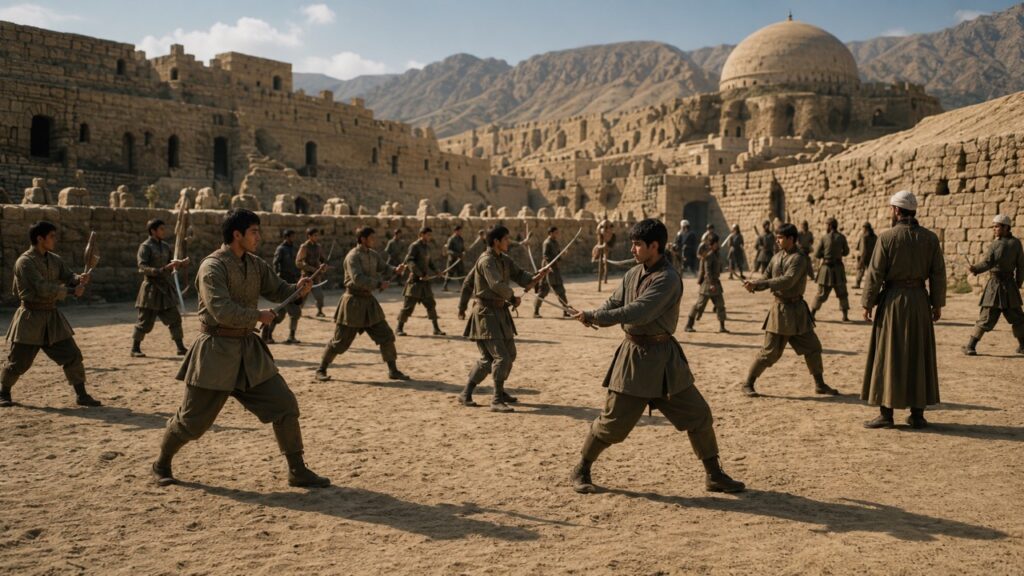
These recruits were not random captives dumped into barracks. They entered what amounted to a residential military academy. Young trainees, known as kuttab, were housed in purpose-built barracks, taught Arabic, converted to Islam, and subjected to years of gruelling technical instruction. The curriculum was codified under the concept of furusiyya — a term encompassing cavalry tactics, horsemanship, archery, swordsmanship, lance technique, care of horses, first aid, and even a moral code of courage and generosity strikingly similar to European chivalry.
Sultan Baybars later constructed two enormous training grounds (maidans) near the Citadel of Cairo: vast complexes with wells, stables, resting areas, and royal viewing quarters — facilities that suggest the training spectacles were public performances as much as military exercises. Only upon completing this formation were Mamluks formally emancipated, granted salaries, horses, and equipment, and integrated into the sultan’s elite cavalry. Freed, but still bound by loyalty to the man who had purchased and shaped them.
The Coup: How Slaves Seized the Sultanate
Al-Salih Ayyub died in November 1249 while campaigning against the Seventh Crusade, led by King Louis IX of France. His wife, Shajar al-Durr, concealed his death for months to prevent the army from fracturing — a remarkable act of political nerve. His son and heir, Turanshah, arrived from Iraq, recaptured Damietta from the Crusaders, and promptly made enemies of the very Mamluks who had just handed him his first military victory.
Turanshah was reported to have threatened to replace the Mamluk commanders with men loyal to himself. In May 1250, Mamluk officers surrounded his tent at dinner and hacked him to death. One account claims Baybars — then a young cavalry commander — delivered the killing blow.
📌 KEY INSIGHT
The Mamluks did not seize power despite their slave origins — they seized it because of them. Their training had forged a corporate identity stronger than any dynastic bond. They were loyal not to bloodlines but to the institution of the sultanate itself, and when that institution failed to honor the relationship, they replaced it. The very quality that made them perfect soldiers — total commitment to a patron above all else — made them lethal the moment that patron betrayed the implicit contract.
What followed was not immediate stability. A former Mamluk officer, Aybeg, was installed as sultan, married Shajar al-Durr to legitimize the transfer of power, and began the delicate task of consolidating authority over a fractious military aristocracy. A second Mamluk, Baybars, fled to Syria after political tensions, only to return as one of the decisive figures in the sultanate’s survival.
The era of Mamluk rule is conventionally divided into two periods: the Bahri Sultanate (1250–1382), dominated by Kipchak Turkish Mamluks originally garrisoned on the River Island (Bahr al-Nil) in Cairo; and the Burji Sultanate (1382–1517), dominated by Circassian Mamluks who had been garrisoned in the towers (burj) of the Cairo Citadel. The Bahri period is generally regarded as the height of Mamluk power; the Burji period was increasingly turbulent, marked by short reigns, plague, and the growing Ottoman threat.
Evidence, Data & Examples: Three Victories That Define an Era
The Mamluk Sultanate’s claim to historical greatness rests above all on three military and political achievements that reshaped the medieval world.
The Battle of Ain Jalut (September 3, 1260)
When the Mongols under Hulagu Khan destroyed Baghdad in 1258 — killing the Abbasid caliph and sacking the greatest library in the world — they seemed unstoppable. Damascus fell without a fight. A Mongol envoy arrived in Cairo demanding the submission of Sultan Qutuz. Qutuz’s response was to execute the envoys and display their heads on Cairo’s gates.
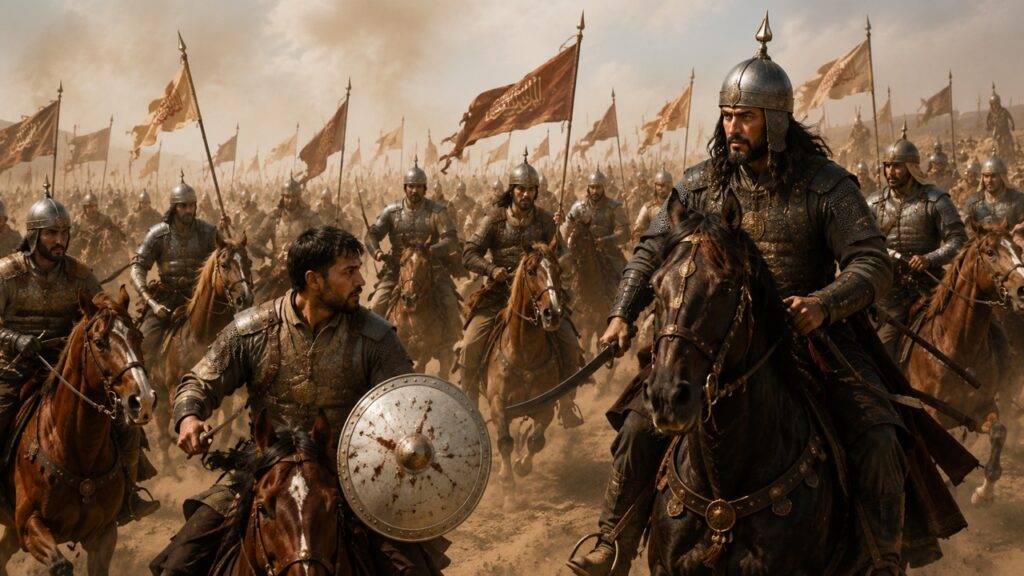
At Ain Jalut (“Goliath’s Spring”) in the Jezreel Valley — modern-day Israel — the Mamluks engaged a Mongol force of approximately 20,000 veterans under the Nestorian Christian commander Kitbuqa. Baybars, commanding the Mamluk vanguard, used a feigned retreat — one of the Mongols’ own signature tactics — to draw Kitbuqa’s forces into an ambush. The Mongol army was routed, Kitbuqa was captured and executed, and the Mongols never again mounted a serious westward push into the Levant. It was the first major defeat of the Mongol Empire since its westward expansion had begun 43 years earlier.
The Expulsion of the Crusaders (1291)
Sultan Baybars and his successors systematically dismantled the remaining Crusader fortifications in the Levant. In 1291, Sultan al-Ashraf Khalil captured Acre — the last major Crusader stronghold — ending nearly two centuries of Crusader presence in the Holy Land.
The Abbasid Legitimacy Gambit (1261)
Mamluk rulers faced a chronic problem: how do slave-born upstarts justify sovereign authority? Their solution was elegant. When Baybars discovered that a member of the Abbasid royal family had survived the Mongol destruction of Baghdad, he brought him to Cairo, formally installed him as caliph, and received investiture — a certificate of legitimate authority — in return. The Abbasid caliphate would nominally continue in Cairo under Mamluk supervision for the next 250 years, providing religious legitimacy to a dynasty that had none by bloodline.
| Achievement | Date | Historical Significance |
|---|---|---|
| Battle of Ain Jalut | 1260 | First major Mongol defeat; halted westward expansion |
| Baybars’ northern campaigns | 1260–1277 | Drove Crusaders from key Levantine fortresses |
| Expulsion from Acre | 1291 | Ended Crusader presence in the Holy Land |
| Abbasid Caliphate installed in Cairo | 1261 | Transferred Islamic religious legitimacy to Egypt |
| Mamluk architectural peak | 1250–1382 | 200+ mosques built; Cairo became Islamic cultural capital |
Practical Implications: What the Mamluk Model Reveals About Power
The Mamluk system forces us to interrogate several assumptions about how power works.
Meritocracy without heredity is structurally fragile — but sometimes brilliantly effective. The Mamluks deliberately suppressed hereditary succession among the military elite. Sons of Mamluks could not automatically inherit their fathers’ status or rank; fresh generations of purchased trainees were regularly introduced to keep the system competitive. This meant that ability, battlefield performance, and political acumen — not birth — determined advancement. The result, during the Bahri period, was a ruling class of extraordinary military competence.
The cost was equally extraordinary instability at the top. Of the twenty-four sultans who ruled between 1250 and 1382, a large proportion came to power through assassination, coup, or forced abdication. The same corporate solidarity that produced Ain Jalut also produced the murder of Turanshah and the eventual killing of Qutuz by Baybars himself — hours after their shared victory.
💬 “In a world where someone’s lineage was a major source of authority, a sultanate ruled by former slaves created a problem of legitimacy — one the Mamluks addressed with remarkable political creativity.” — TheCollector
Outsider loyalty as political technology. The core innovation of the Mamluk system — using ethnic and cultural outsiders precisely because they had no pre-existing local loyalties — resonates with dynamics visible in many subsequent political systems. Bureaucracies staffed by outsiders, technocratic élites deliberately separated from regional power bases, specialist corps recruited from minorities: all echo the Mamluk intuition that divided loyalty is dangerous and that manufactured belonging can be more durable than natural affiliation.
Cultural production as legitimation. The Mamluks built aggressively — not merely for piety, but to broadcast permanence. Over 200 mosques were constructed in Cairo during the Mamluk era. The Sultan Hassan Mosque complex (1356–1363) remains one of the largest mosques in the world by area. The historian Ibn Khaldun, who lived and worked in Cairo under Mamluk patronage, produced his Muqaddimah — arguably the first work of social science — during this period. Cairo became, under the Mamluks, the undisputed intellectual and artistic capital of the Arabic-speaking world.
A dynasty born of slaves had become the principal patron of Islamic civilization.
Nuances, Counterpoints & What’s Next: The Limits of the Mamluk Story
Celebratory accounts of the Mamluks risk sentimentalizing a system built on the organized capture and sale of children. The furusiyya ideal and the architectural splendor of Mamluk Cairo existed within a structure that commodified human beings systematically and across centuries. Historians including David Ayalon and Reuven Amitai have stressed that the relative “privilege” of the Mamluk trainee must be understood in that context: a traumatic uprooting and forced conversion followed by conditional enfranchisement does not constitute opportunity in any straightforward sense.
There is also scholarly debate about how exceptional the Mamluk case truly was. Similar slave-soldier institutions existed across the Islamic world — the Ottoman Janissaries being the most obvious parallel — and throughout other civilizations. What distinguished the Mamluks was the completeness of their political takeover and the duration of their rule, not the underlying practice.
The Burji period also complicates triumphalist narratives. From the mid-fourteenth century onward, the Black Death devastated the Mamluk population and treasury; the Portuguese opening of Atlantic and Indian Ocean trade routes after 1490 strangled the lucrative spice trade that had enriched Mamluk Syria; and the Ottoman Empire’s adoption of firearms — which the Mamluks, as a cavalry culture, dismissed as dishonorable — made their forces technologically obsolete. In 1516–1517, the Ottoman Sultan Selim I defeated the Mamluk army in two engagements, ending the sultanate permanently.
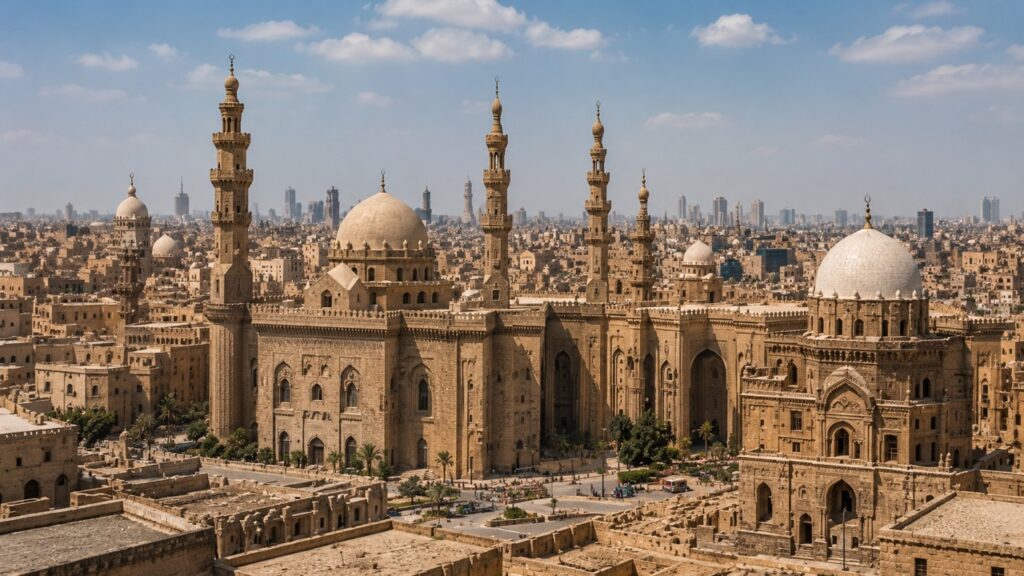
Tellingly, the Mamluks did not disappear. They survived as an administrative class under Ottoman governors, gradually reasserting power until, by the early seventeenth century, they again effectively controlled Egypt. Their final end came only in 1811, when the Albanian-Ottoman officer Muhammad Ali Pasha invited Mamluk leaders to a celebration at the Cairo Citadel and had them ambushed and killed. The institution that had begun with a ninth-century caliph’s purchase of Turkic boys ended in a treacherous banquet — a fitting epilogue for a story always defined by the collision of loyalty and betrayal.
Conclusion
The Mamluks defy easy categorization. They were enslaved and they were formidable. They were outsiders and they became the guardians of Islamic civilization. They built a sultanate on the ruins of the very dynasty that had purchased them. For more than two and a half centuries, they held a fractured empire together through a combination of military brilliance, architectural ambition, religious pragmatism, and ruthless political calculation.
Their story is not a simple triumph of the dispossessed. The Mamluk system was cruel in its foundations and often brutal in its internal politics. But it produced, at critical moments, exactly the capacity that the Islamic world needed: soldiers willing to face the Mongols when no one else would, administrators capable of rebuilding institutions the Mongols had destroyed, and patrons capable of sustaining the scholars and architects who preserved what we now call Islamic civilization.
The next time you encounter the assumption that legitimacy flows naturally from bloodlines, that outsiders cannot become guardians, or that servitude and sovereignty are opposites — remember Ain Jalut. A general who was once a slave’s property stood at Goliath’s Spring and broke the momentum of history’s most terrifying empire.
🔑 KEY TAKEAWAYS
- The Mamluk system originated in the ninth century as a deliberate strategy to create loyalties untethered from tribal or ethnic affiliation, reaching its apex with the Egyptian sultanate founded in 1250.
- The Battle of Ain Jalut (1260) was the first major defeat of the Mongol Empire, won by Mamluk forces under Baybars, and effectively ended Mongol westward expansion.
- The Mamluks deliberately suppressed hereditary succession, maintaining meritocratic advancement through fresh cohorts of trained slave-recruits — a system that produced military brilliance and political instability in equal measure.
- The furusiyya code of knightly conduct — covering cavalry skills, archery, ethics, and medical knowledge — was so prestigious that free men voluntarily entered servitude to access it.
- The Mamluk cultural legacy includes over 200 mosques in Cairo, the patronage of Ibn Khaldun’s foundational social science, and architectural monuments still standing today, making them both the military and cultural custodians of medieval Islam.
Frequently Asked Questions
Who were the Mamluks and where did they come from?
The Mamluks were slave soldiers, primarily Kipchak Turks from Central Asia and later Circassians from the Caucasus, purchased by Islamic rulers and trained as elite cavalry forces. The word “Mamluk” derives from the Arabic for “one who is owned.” After rigorous military and religious education, they were formally freed but remained part of a hereditary-free warrior caste. By 1250, they had seized control of Egypt from the Ayyubid dynasty, founding a sultanate that lasted until 1517.
How did the Mamluks take control of Egypt?
The Mamluks seized Egypt in 1250 when their generals assassinated the last Ayyubid heir, Turanshah, shortly after a military victory against the Seventh Crusade. Turanshah had threatened to replace the Mamluk commanders with his own loyalists, triggering a preemptive coup. One of their commanders, Aybeg, was installed as the first Mamluk sultan, legitimized by marrying the Ayyubid queen Shajar al-Durr. The takeover was surgical, exploiting the institutional loyalty that the Mamluk training system had forged.
Did the Mamluks really defeat the Mongols?
Yes — decisively. At the Battle of Ain Jalut on September 3, 1260, Mamluk forces under Sultan Qutuz and general Baybars defeated a Mongol army in the Jezreel Valley, in modern-day Israel. It was the first major defeat of the Mongol Empire since its westward expansion had begun more than four decades earlier. Baybars used a feigned retreat — the Mongols’ own signature tactic — to lure the enemy into an ambush, resulting in the rout and capture of the Mongol commander Kitbuqa.
What was the furusiyya code and why does it matter?
Furusiyya was the Mamluk system of military education and knightly conduct, encompassing cavalry tactics, mounted archery, swordsmanship, horsemanship, first aid, and a moral code of courage and generosity. Detailed manuals codified every aspect of training. The system was so prestigious and socially rewarding that free Egyptians reportedly arranged their own sale into slavery to access it. Furusiyya made the Mamluks arguably the most technically proficient heavy cavalry force in the medieval world.
Why did the Mamluk Sultanate eventually fall?
The Mamluk Sultanate fell to the Ottoman Empire in 1516–1517 for several converging reasons: repeated waves of the Black Death had depleted the population and treasury from the mid-fourteenth century; Portuguese exploration of Atlantic and Indian Ocean sea routes had destroyed the Syrian spice trade revenues; and the Mamluks’ cultural disdain for gunpowder weapons left them technologically outmatched against Ottoman artillery. Despite the fall of the sultanate, Mamluks survived as a political class in Egypt until Muhammad Ali Pasha had them killed in 1811.
What cultural legacy did the Mamluks leave behind?
The Mamluk legacy in Cairo is monumental, literally. Over 200 mosques were built during the sultanate, including the vast Sultan Hassan Mosque-Madrasa complex. The era produced great scholars including the historian Ibn Khaldun, whose Muqaddimah is considered a founding text of sociology and historiography. Cairo under Mamluk patronage became the intellectual and artistic capital of the Arabic-speaking world, attracting craftsmen, architects, and scholars from across the Islamic world, whose works continue to stand today.
How is the Mamluk system similar to or different from the Ottoman Janissaries?
Both the Mamluks and the Ottoman Janissaries were slave-soldier institutions that used educated, converted outsiders as elite military forces. The key difference lies in political outcome: the Janissaries remained subordinate to the Ottoman dynasty (until their abolition in 1826), while the Mamluks completely supplanted the dynasty they served, seizing sovereign power for themselves. The Mamluk model was also more explicitly meritocratic in theory, suppressing hereditary advancement in ways the Janissary system, which eventually became hereditary, did not.
Sources & further reading:
- Mamluk — Encyclopædia Britannica
- Battle of Ayn Jalut — Encyclopædia Britannica
- The Mamluk Sultanate: How Slaves Came to Rule an Empire — TheCollector
- Slave, Soldier, Lord, and Sovereign: The Story of Baybars — Medievalists.net
- Mamluk Religious Architecture — Academia.edu
- Who Were the Mamluks? — History Today