Table of Contents
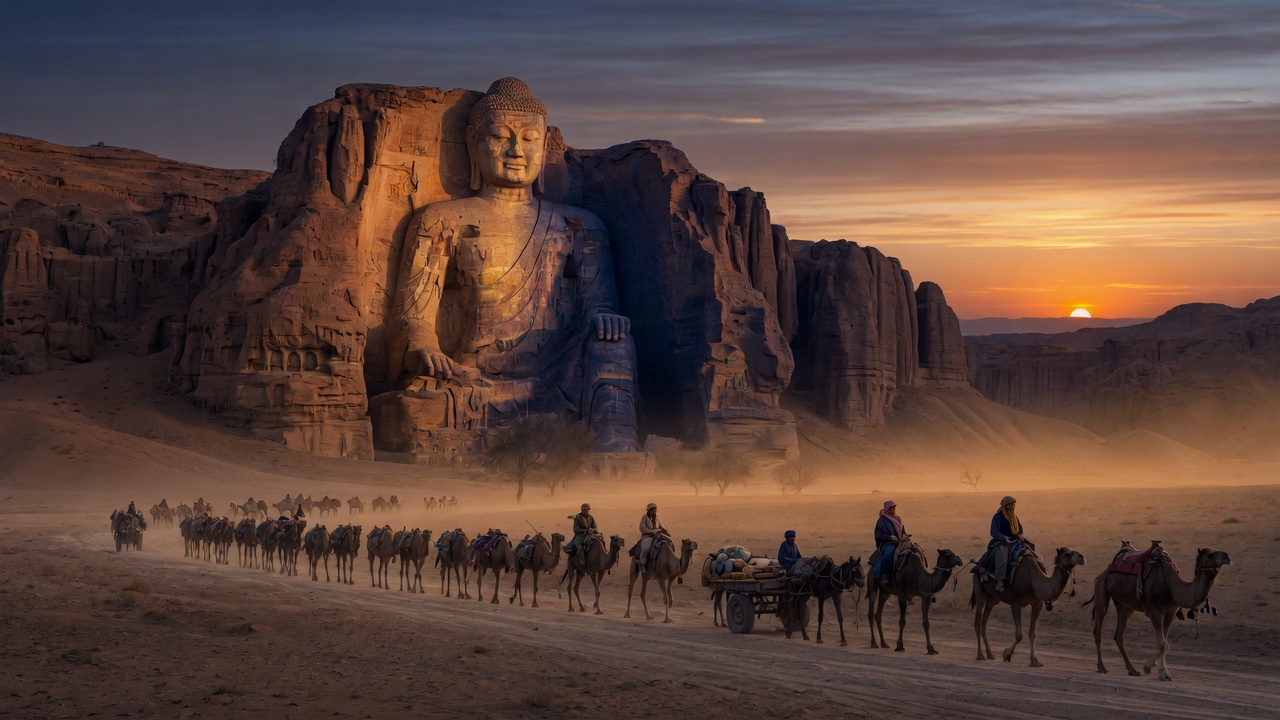
Imagine a religion that spread from the Atlantic coast of North Africa to the South China Sea, converted a Central Asian empire, attracted one of history’s greatest philosophers, and offered the most intellectually serious answer to evil the ancient world had ever heard — and then disappeared almost without trace. That religion existed. It was called Manichaeism.
Founded in the third century CE by an Iranian prophet named Mani, it wasn’t a regional cult or a minor sect. At its height, Manichaeism was a genuine world religion with a sophisticated theology, a structured clergy, a canon of scriptures written by its founder, and missionaries fluent in a dozen languages. Yet by the fourteenth century, it was effectively gone — persecuted to extinction by every major civilisation it touched.
This is the story of how Manichaeism rose, why it spread so far, and what its erasure reveals about the fragile relationship between radical ideas and political power.
The Prophet Who Wanted to Unite All Faiths
To understand Manichaeism, you must first understand its founder’s extraordinary ambition. Mani was born in 216 CE in Seleucia-Ctesiphon, in what is now Iraq, into a Jewish-Christian ascetic community. At age twelve, he received the first of two divine visions; at twenty-four, the second vision commanded him to make his revelation public.
What Mani proclaimed was audacious: that every major prophet before him — Zoroaster, Buddha, and Jesus — had been genuine messengers of the divine, but each had delivered only a partial truth, to a single people, in a single language. Mani claimed he would deliver the complete and final revelation, written down in his own hand, in a form that could travel across all cultures and languages. He called himself the “Seal of the Prophets” — a title that Islam would later adopt for Muhammad.
The theology Mani constructed drew from every tradition he knew. From Zoroastrianism came the central dualism: the universe is the arena of an eternal conflict between a Kingdom of Light and a Kingdom of Darkness. From Gnosticism came the idea that human souls are sparks of divine light trapped in a corrupt material world. From Buddhism came the ascetic ethics and the monastic structure. From Christianity came the reverence for Jesus as a figure of light, and the apocalyptic framework of an end-time when light would finally separate from darkness forever.
The result was a religion of striking internal coherence: dualism as cosmology, asceticism as practice, and gnosis — revealed spiritual knowledge — as the path to salvation.
💬 “Mani is the only major religious figure I know of who partook in a Jewish and Christian prophetic tradition, centred his religion on a Zoroastrian dualism, and wound up in a Buddhist and Hindu afterlife.” — Douglas Galbi, Literature and History podcast
Manichaeism also divided its followers into two tiers. The Elect — priests and monks — observed strict rules: vegetarianism, celibacy, no manual labour, constant prayer, and the transmission of scripture. The Hearers (or Auditors) supported the Elect materially, lived less ascetically, and hoped through service to be reborn as Elect in a future life. This two-tier structure would prove both a strength and a vulnerability.
The Core Idea That Made Manichaeism Dangerous
Every successful religion answers a question that existing faiths struggle to address. Manichaeism answered one that has tormented theology since before recorded history: if God is good and all-powerful, why does evil exist?
Christianity’s answer — that evil is the absence or privation of good, permitted by God to allow human free will — had its critics. Manichaeism offered a radically different solution: evil is real, substantial, and co-eternal with good. There is no omnipotent good God. There are two ultimate principles, equally ancient, in perpetual war. The world is not God’s good creation that fell — it is the battlefield itself, partly composed of trapped divine light.
This wasn’t nihilism. It was, in its own terms, a profound relief. If you lived in the third or fourth century CE — amidst wars, plagues, and the collapse of empires — Manichaeism’s diagnosis of reality felt honest in a way that orthodox optimism could not. It said: you are right that something is deeply wrong with the world. That wrongness is real, not an illusion. And here is how you escape it.
The escape route was knowledge. By understanding the cosmic drama of light and darkness, and by practising the disciplines of the Elect (or supporting them as a Hearer), a soul could gradually purify itself, release its trapped particles of light, and ultimately return them to the Kingdom of Light after death. Salvation was not arbitrary grace — it was a rational, achievable spiritual project.
📌 KEY INSIGHT
Manichaeism was arguably the ancient world’s most intellectually honest engagement with the problem of evil. Unlike traditions that explained suffering away, Mani built it into the architecture of the universe — making it a feature, not a bug. This is why it attracted some of the sharpest minds of late antiquity, including Augustine of Hippo, who spent nine formative years as a Manichaean before finding it ultimately unsatisfying.
From Persia to China: The Geography of a Lost Faith
Manichaeism’s geographic reach was staggering. Within decades of Mani’s death — he was imprisoned and executed by the Zoroastrian establishment between 274 and 277 CE, an end his followers called the “Passion of the Illuminator” — his missionaries were crossing continents.
The table below maps Manichaeism’s regional timeline:
| Region | Arrival | Peak Period | End |
|---|---|---|---|
| Sassanid Persia (birthplace) | 240s CE | 240–272 CE | Persecuted from 272 CE onward |
| Roman Empire / North Africa | 280s CE | 3rd–4th century | Largely gone by 5th century |
| Eastern Roman Empire | 300s CE | 4th–5th century | Eradicated by 6th century |
| Central Asia / Silk Road | 300s CE | 5th–8th century | Declined after 9th century |
| Uyghur Khaganate | 762 CE | 762–840 CE | Collapsed with Khaganate in 840 CE |
| China (Fujian/Zhejiang) | 694 CE | 9th–13th century | Underground, surviving to ~14th century |
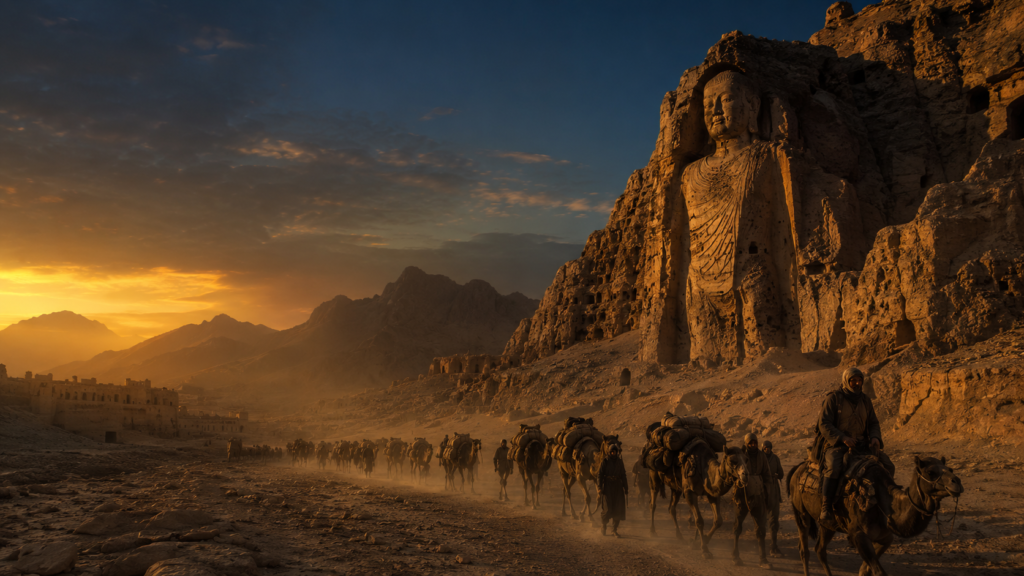
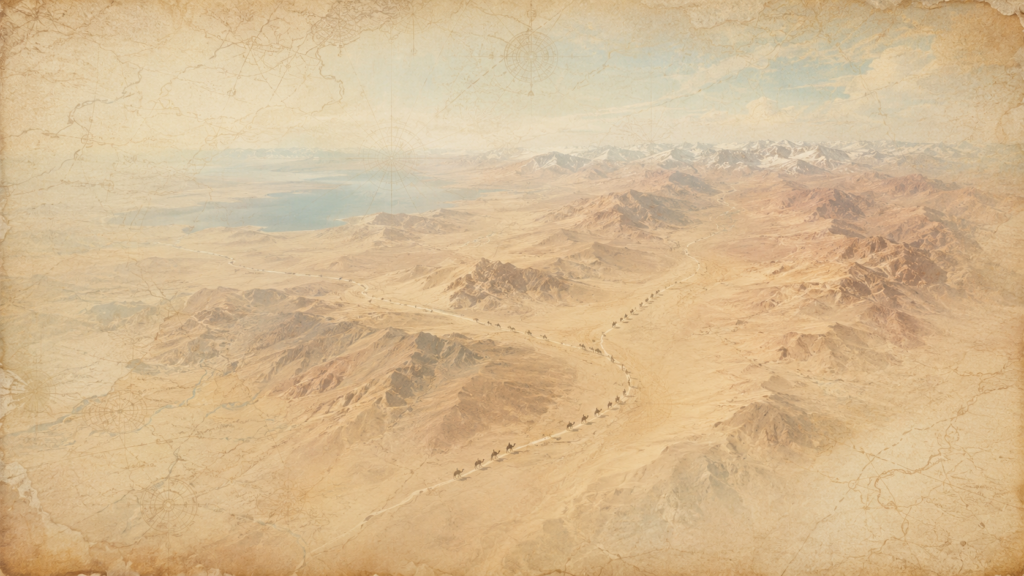
The Silk Road was Manichaeism’s highway. Because Mani had designed his religion with deliberate adaptability — instructing missionaries to adopt local imagery, language, and symbolism — it proved uniquely suited to cross-cultural transmission. In China it became known as Míngjiào, the “Religion of Light,” and Mani was reinterpreted as a Buddha of Light.
The religion’s greatest political coup came in 762 CE, when Bögü Khagan, ruler of the Uyghur Khaganate, converted after meeting Manichaean priests during a military campaign. He declared it the state religion of his empire — spanning modern China, Russia, Kazakhstan, Kyrgyzstan, and Mongolia. One Uyghur inscription praised the conversion for turning the people “from blood sacrifices to vegetarians, from a state which indulged in excessive killing to a nation that exhorts righteousness.” It remains the only time Manichaeism held official state status anywhere in history.
But the Uyghur connection would also prove fatal. When the Khaganate collapsed under Kyrgyz attack in 840 CE, the Tang Dynasty’s Emperor Wuzong launched the devastating Huichang Persecution. Without their imperial protectors, Manichaean temples across northern China were destroyed, and priests were publicly executed. The faith survived only by going underground in the southeast provinces of Fujian and Zhejiang.
What Manichaeism Left Behind
To call Manichaeism simply “extinct” is to underestimate the extraordinary depth of its afterlife. Its ideas did not die — they were absorbed, transformed, and scattered across civilisations.
The most consequential legacy was Augustine of Hippo. The man who would become the most influential theologian in Western Christianity spent nine years as a Manichaean Hearer in the fourth century before his famous conversion. His later anti-Manichaean writings are among the most systematic theological refutations in history — but scholars have long observed that Augustine carried Manichaean assumptions into his mature Christian thought. His intense preoccupation with the reality of evil, his doctrine of original sin, his bleak assessment of the fallen human will — all bear the marks of someone who had genuinely grappled with, and never fully escaped, the Manichaean framework. Manichaean dualism helped forge Western Christianity’s deepest anxieties.
In medieval Europe, the Cathar movement in southern France (12th–13th centuries) and the Bogomils in the Balkans held beliefs strikingly similar to Manichaeism — a wicked creator of the material world, a spiritual elite, strict asceticism. Whether these represent direct Manichaean transmission or independent rediscoveries of similar ideas remains contested among scholars. The Cathars were eventually annihilated in a twenty-year Crusade and the fires of the Inquisition.
💬 “Persecution was a major factor contributing to the demise of Manichaeism. Manichaeans were persecuted in the Roman world, in Persia, and in China. The reasons were many — religious, political, economic.” — Dr Gunner Mikkelsen, Macquarie University
Most quietly, the word “Manichaean” itself has survived. In modern English and political discourse, to call someone’s thinking “Manichaean” means they divide the world into absolute good and absolute evil, with no grey. The extinct religion lives on as an adjective for a certain kind of dangerous moral simplicity — a bitter irony for a faith whose actual theology was anything but simple.
Why Did It Fail? The Complexity Behind the Collapse
The obvious answer — persecution — is true but incomplete. Manichaeism was indeed persecuted by every major power it encountered: Sassanid Persia, the Roman Empire, the Byzantine Empire, the Islamic Caliphate, and the Tang Dynasty. No other world religion has the distinction of being suppressed by so many different civilisations on so many different grounds.
But structural weaknesses mattered equally. The two-tier system, which concentrated all knowledge and discipline in the Elect, made the faith vulnerable. If a community lost its Elect — through persecution, death, or exile — the Hearers had no independent capacity to maintain the tradition. There was no equivalent of the parish priest or the village mosque.
Manichaeism also suffered from its adaptability. Its willingness to blend with local traditions, which fuelled its spread, also blurred its identity. Chinese Manichaeism became so Buddhicised that it was indistinguishable from Buddhist-derived sects — which made it easier for authorities to claim it was fraudulently impersonating Buddhism, a recurring charge in Tang edicts.
Finally, the religion had no stable territorial base. Islam had the Arabian Peninsula; Christianity had the Roman state from the fourth century onward; Buddhism had India and later Southeast Asia. Manichaeism was always a guest — and guests can always be expelled.
Modern scholarship, including recent journal work in Studia Ceranea (2024) and Turkic Studies Journal (2022), continues to reassess Manichaeism’s influence on medieval heresies and Central Asian cultures. The 20th-century discoveries of Manichaean manuscripts at Dunhuang and Turfan in China, and at Medinet Madi in Egypt, transformed scholarly understanding of just how sophisticated and extensive this lost religion truly was.
Conclusion
Manichaeism vanished, but the questions it posed did not. Its founder built the most ambitious religion in ancient history — a faith explicitly designed to transcend every cultural boundary, to absorb every tradition, and to answer the one theological problem no one else dared confront head-on. That it was destroyed, systematically, by every empire it touched is not evidence of its weakness. It is evidence of how threatening a truly universal idea can be to those whose power depends on particular loyalties.
The last Manichaean temple on Earth still stands on a hillside in Fujian, China — its statue of Mani long mistaken by local officials for a carving of the Buddha, which is probably the only reason it survived. That accidental disguise is a fitting epitaph for a faith that spent over a thousand years hiding in plain sight.
The next time someone is accused of thinking in “black and white,” they are, without knowing it, invoking a religion that once spanned half the known world. Mani would probably have found that both satisfying and quietly devastating.
🔑 KEY TAKEAWAYS
- Manichaeism was founded in 216 CE by the prophet Mani in Babylonia, who explicitly designed it as a universal synthesis of all prior world religions.
- At its peak, it stretched from North Africa to China — one of the widest geographical footprints of any ancient faith — spread largely along the Silk Road.
- The Uyghur Khaganate (762–840 CE) is the only sovereign state in history to have adopted Manichaeism as an official state religion.
- Augustine of Hippo’s nine years as a Manichaean shaped his later Christian theology, embedding Manichaean preoccupations with evil and the fallen will into the foundations of Western Christianity.
- The word “Manichaean” survives in modern English, meaning binary or black-and-white thinking — a linguistic fossil of a religion that otherwise ceased to exist by the fourteenth century.
Frequently Asked Questions
What exactly is Manichaeism?
Manichaeism is an extinct dualistic religion founded by the prophet Mani in 216 CE in what is now Iraq. It taught that the universe is governed by two eternal, opposing forces — Light and Darkness — and that human souls are particles of divine light trapped in a corrupt material world. Salvation came through spiritual knowledge and ascetic practice. At its height, Manichaeism spanned from North Africa to China.
Why did Manichaeism disappear?
Manichaeism disappeared due to relentless persecution across multiple civilisations — Zoroastrian Persia, the Roman Empire, the Islamic Caliphate, and the Tang Dynasty all suppressed it for different reasons. The religion also had structural vulnerabilities: its two-tier clergy system meant communities collapsed without their priests, and it lacked a stable territorial homeland from which to rebuild after persecution.
Did Manichaeism influence Christianity?
Yes — indirectly but significantly. Saint Augustine spent nine years as a Manichaean Hearer before converting to Christianity. His subsequent engagement with Manichaean dualism shaped his doctrines on evil, original sin, and the divided human will, which became foundational in Western Christian theology. Some scholars also argue that medieval movements such as the Cathars and Bogomils were influenced by Manichaean ideas, though the precise transmission remains debated.
Where did Manichaeism spread along the Silk Road?
Manichaeism spread from its Babylonian origin across the Sassanid Persian Empire, westward into the Roman Empire and North Africa, and eastward along the Silk Road through Central Asia to China. In China it was known as Míngjiào (Religion of Light). The Uyghur Khaganate — spanning modern China, Russia, Kazakhstan, Kyrgyzstan, and Mongolia — briefly made it a state religion in 762 CE.
Is there any surviving Manichaean site today?
Yes. The Cao’an temple in Fujian Province, China, is widely regarded as the last surviving Manichaean place of worship on Earth. Its central statue of Mani was disguised as a Buddha image for centuries to survive anti-Manichaean persecution. Although no organised Manichaean community is known to exist, the temple still stands and is accessible to visitors.
What does “Manichaean” mean in modern usage?
In contemporary English and political discourse, “Manichaean” (or “Manichean”) describes thinking that divides everything into absolute good and absolute evil, with no nuance or middle ground. This usage derives from the religion’s core dualism of Light versus Darkness. It is typically used critically — to accuse a person or ideology of oversimplifying complex reality into a binary struggle.
Who were the Elect and the Hearers in Manichaeism?
Manichaeism divided its followers into two distinct groups. The Elect were the clergy — priests and monks who lived under strict rules: vegetarianism, celibacy, no manual labour, and constant prayer. They were the vehicle through which divine light was purified and released. The Hearers (or Auditors) were lay followers who supported the Elect materially and lived less ascetically, hoping to be reborn as Elect in a future life. This hierarchy was both the religion’s organisational strength and, under persecution, its greatest structural weakness.
Sources & further reading:
- Manichaeism — Encyclopaedia Britannica
- Manichaeism: The Religion that Went Extinct — World Atlas
- China’s Forgotten Faith: Manichaeism in Fujian — RADII
- How Did Manichaeism Spread to China? — The Collector
- Manichaeism — University of Washington Silk Road Project
- Manichaeism — Philopedia